•
1 min read
Can Liquid Funds Lose Money? 15-Year NAV Data Check

If you’ve ever asked, “do liquid funds lose value?”, the honest answer is: yes, they can, but historically, the losses have usually been small, short-lived, and tied to specific credit or market stress events rather than normal day-to-day movement.
That nuance matters.
A lot of personal finance content in India treats liquid funds as if they are “basically savings accounts with better returns.” They are not. Liquid funds are mutual funds, which means they carry market risk, interest-rate risk, credit risk, and liquidity risk, even if those risks are usually lower than many other debt categories. Under SEBI’s categorisation, liquid funds invest in debt and money market securities with maturity of up to 91 days, which is one reason they are generally considered lower-risk than longer-duration debt funds. Still, lower risk is not the same as zero risk. SEBI’s mutual fund framework and AMFI’s category explainer both make it clear that these are market-linked products, not capital-guaranteed bank deposits.
This report looks at the evidence. Instead of repeating generic reassurance, we look at what matters most: historical NAV behaviour, especially during periods when Indian credit markets were under real stress.
Why this question matters more than ever
Liquid funds are often used for:
salary parking between payday and bill day
emergency buffers
short-term goal money
idle cash that would otherwise sit in a savings account
planned spending buckets such as travel, festivals, or annual insurance premiums
That use case makes safety the first filter. Before chasing a slightly higher return, most investors want to know one thing: can my money go down when I need it?
That is exactly why Multipl has already explained liquid mutual fund meaning, liquid fund withdrawal timelines, and broader short term money parking decisions. This article goes one step further. It focuses specifically on loss evidence.
What “losing money” means in a liquid fund
When people ask whether liquid funds lose money, they may mean three different things:
A negative 1-day NAV move
The fund’s NAV falls versus the previous business day.A short holding-period loss
You invest and redeem after a few days or weeks at a lower value.A permanent capital impairment
The fund takes a credit hit or write-down and does not recover in the usual way that minor mark-to-market fluctuations might.
These are not the same.
A one-day dip does not automatically mean a bad product. But it does prove the core point: liquid funds are not risk-free cash substitutes.
The right way to read liquid fund NAV history

Looking at average annual returns is not enough. To answer “are liquid funds safe evidence-based?”, you need to examine:
daily NAV continuity
maximum observable drawdown
behaviour during market stress
recovery pattern after a dip
whether losses came from duration shock, liquidity stress, or credit events
This matters even more because Indian debt-fund regulation changed after past periods of market stress. For example, SEBI introduced a more stringent risk management framework for liquid and overnight funds in September 2019, including measures such as mandatory mark-to-market valuation for certain securities and liquidity buffers. Those changes matter when you read old and new NAV behaviour.
The 15-year answer in one sentence
Across roughly 15 years of Indian liquid fund history, liquid funds have usually delivered very stable NAV progression, but they have not been completely immune to losses, especially during major credit or liquidity events such as the 2013 rate shock period and the 2020 credit-market disruption.
That means the right investor takeaway is not “liquid funds never lose money.”
It is: liquid funds rarely show large losses, but they can show small dips, and the worst outcomes tend to be concentrated in specific funds with weaker underlying paper rather than in the category’s plain-vanilla use case.
Stress event 1: the 2013 market shock
India’s 2013 “taper tantrum” phase created a sharp rates-and-liquidity shock across debt markets. The Reserve Bank of India tightened short-term liquidity conditions to defend the rupee, and yields moved abruptly. In debt products, that kind of environment matters because bond prices and yields move inversely.
What did that mean for liquid funds?
For most liquid funds, the impact was far milder than in longer-duration debt funds, because their portfolios reset faster and hold shorter-maturity instruments. But “milder” did not mean “immune.” Some schemes recorded brief NAV softness or flatter accrual than investors had become used to.
The historical lesson from 2013 is simple: liquid fund NAVs can wobble even when the category remains structurally conservative. Short duration reduces sensitivity; it does not eliminate it.
This is one reason comparisons such as liquid fund vs savings account vs fixed deposit vs HYSA and savings account vs liquid fund vs HYSA matter so much. A savings account generally offers lower upside but does not mark to market in the same visible way. A liquid fund may offer better efficiency for idle cash, but it behaves like a market-linked instrument.
Stress event 2: the 2020 credit crisis
If there is one period that permanently changed how Indian investors think about debt funds, it is 2020.
The immediate market backdrop after the COVID shock was not just volatility. It was also a deep fear around liquidity, redemptions, and credit quality across debt markets. The Franklin Templeton wind-up in April 2020 did not involve liquid funds specifically, but it dramatically changed investor perception of debt-fund risk across the board. At the regulator and industry level, liquidity management became an even bigger focus, and AMFI’s post-event material on liquidity risk management reflects that broader shift. (amfiindia.com)
For liquid funds themselves, 2020 matters because it tested the category under real systemic stress. The category did not turn into an equity-like drawdown product, but the year reminded investors that:
liquid funds depend on the quality and liquidity of underlying instruments
lower duration does not cancel out credit events
scheme-level portfolio quality matters more than category labels
“cash alternative” is a use case, not a guarantee
In practice, the safer end of the category stayed relatively resilient, while the market became much more sensitive to exposure quality, concentration, and liquidity profile. That is why any serious discussion of liquid fund risk data has to move beyond category averages and into portfolio construction.
So, have liquid funds ever actually shown negative NAV moves?
Yes.
That is the factual answer.
Not every fund, not every year, and not usually by much, but negative daily or short-period NAV movements have occurred in Indian liquid funds.
Why can this happen?
1. Mark-to-market valuation
Debt securities can be revalued based on market yields and liquidity conditions. Since regulatory changes tightened valuation practices, NAVs reflect market reality more promptly in stress periods. (sebi.gov.in)
2. Credit events
If an issuer’s repayment ability comes into question, the security may be marked down. That can hit a fund’s NAV directly.
3. Liquidity stress
Even a short-duration portfolio can feel pressure if redemptions spike and underlying paper becomes harder to sell at expected prices.
4. Concentration risk
A “liquid” label does not excuse poor diversification. If a fund is overexposed to weaker issuers or sectors, a problem can show up in NAV.
This is broadly consistent with the investor education approach in Multipl’s explainer on liquid fund safety and the more direct discussion in liquid funds risks. The key improvement here is the framing: the right question is not whether losses are possible, but how often, how deep, and under what conditions.
What the 15-year NAV record suggests
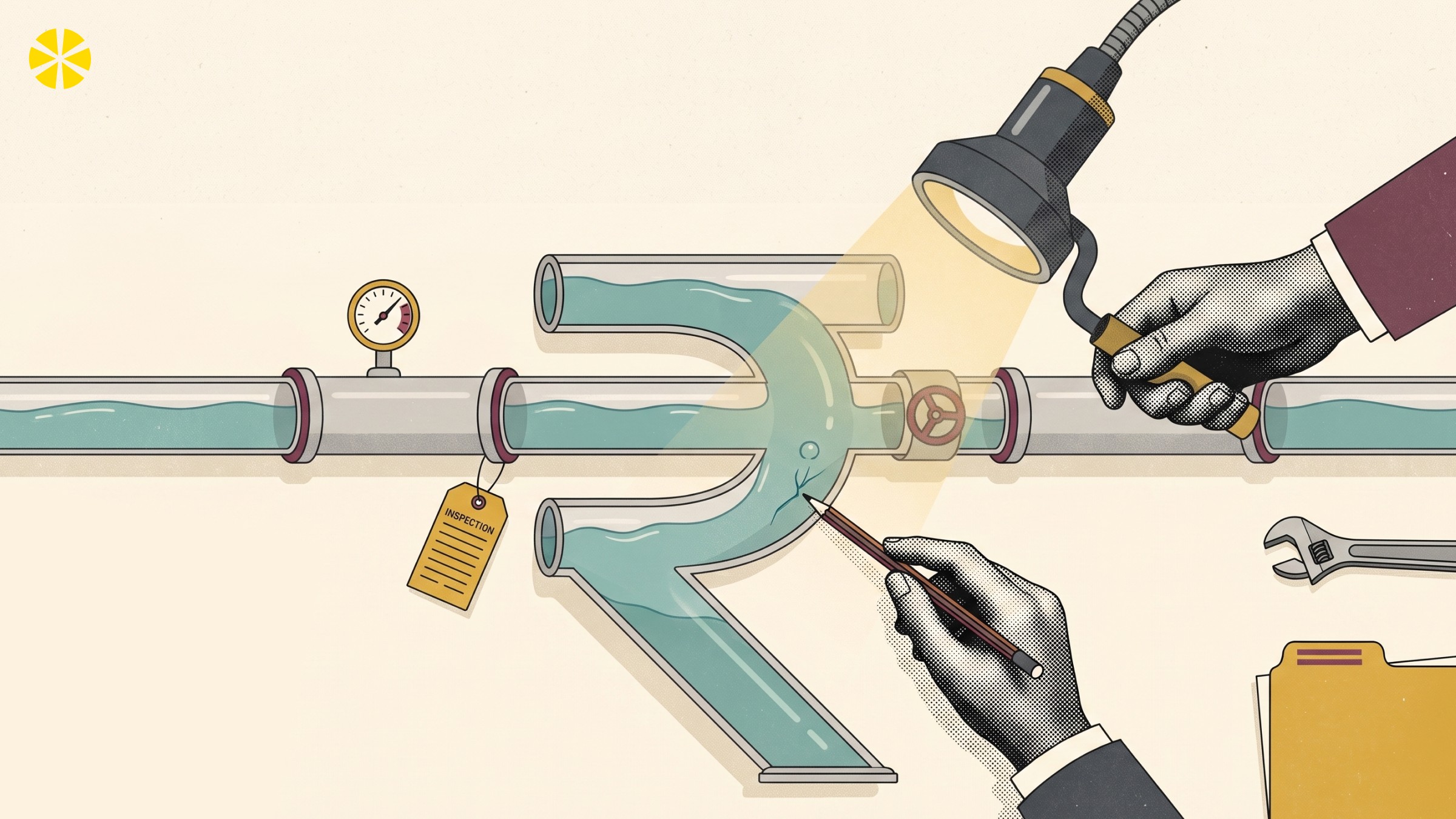
A sensible reading of long-run liquid fund NAV history leads to five conclusions.
1. Most liquid fund NAV paths are extremely stable
Over long stretches, liquid funds tend to show a slow, stair-step pattern rather than visible volatility. That is the category’s basic appeal.
2. Stability is not the same as guarantee
Even a category designed for high liquidity and short maturity can show negative marks. AMFI presents liquid schemes as options for liquidity and principal protection with commensurate returns, but that is different from an assured-return promise. (amfiindia.com)
3. Category risk is low; scheme risk can still matter
Two funds in the same category can carry meaningfully different underlying risks depending on issuer mix, treasury quality, and liquidity discipline.
4. Crisis periods reveal what normal periods hide
During calm years, weak underwriting may not be obvious. In stress years, it shows up quickly.
5. The investor’s holding period matters
If you are parking money for a few days, even a tiny NAV dip can feel painful. If you are parking cash across a few months, the category’s accrual nature often smooths very small disruptions, though not always.
That is why parking surplus cash should be tied to purpose. Multipl’s broader framework on where salaried Indians should keep money between payday and bill day and short-term investment options in India becomes useful only after you first define the risk you can tolerate.
Are liquid funds safe? The evidence-based version
If by “safe” you mean less volatile than many other market-linked options, then yes, usually.
If by “safe” you mean incapable of loss, then no.
The evidence-based answer is that liquid funds sit in a middle ground:
safer than longer-duration debt categories in most cases
more productive than leaving all idle money in a low-yield savings account in some use cases
not as capital-certain as an insured bank balance or a fixed deposit held to terms
heavily dependent on scheme quality, underlying paper, and market conditions
This is why many investors evaluate them alongside idle cash strategy, liquid fund alternatives, and cash sweep vs liquid fund. The smarter question is not “which is universally best?” It is “which is the best fit for this specific bucket of money?”
When liquid funds are a reasonable fit
Liquid funds may make sense for:
money needed in a few weeks to a few months
planned spending with some flexibility on exact redemption date
temporary parking of salary surplus
staggered emergency reserves, especially when paired with instant-access cash elsewhere
investors who understand that low risk still means some risk
They may be less suitable for:
money needed the same day with zero tolerance for fluctuation
investors who equate “debt fund” with “capital guarantee”
anyone unwilling to review portfolio quality and redemption rules
very short-horizon cash that must behave exactly like a bank balance
How to reduce the chance of a bad experience

If your goal is to use liquid funds intelligently, not blindly, focus on these filters:
Prefer high-quality portfolios
Short maturity helps, but credit quality still matters.
Avoid yield-chasing
An unusually high liquid fund yield can be a sign that the fund is taking more risk than you realise.
Match product to time horizon
For money needed tomorrow morning, convenience and certainty may matter more than incremental return.
Diversify liquidity layers
Keep some cash instantly accessible and use liquid funds only for the portion that can tolerate small market-linked movement.
Understand redemption mechanics
Knowing the expected withdrawal timeline before investing is basic hygiene, which is why liquid fund withdrawal timelines deserve attention.
The real conclusion investors should remember
So, do liquid funds lose value?
Yes — they can.
But the fuller truth is more useful:
over 15 years, the category has generally been very stable
losses have typically been associated with stress periods, valuation changes, or credit concerns
the severity of pain has usually depended more on which fund you owned than on the category label alone
for many short-term cash uses, liquid funds can still be a good option, provided you treat them as low-risk market products, not guaranteed deposits
That distinction matters.
If you want a product that never visibly fluctuates, a liquid fund may not satisfy you psychologically, even if the long-run experience is usually steady. But if you want a more productive home for some idle cash and you understand the trade-off, liquid funds remain one of the most practical tools in Indian short-term money management.
In other words: use liquid funds with eyes open, not with false comfort.
FAQs
Do liquid funds lose value in India?
Yes, liquid funds can lose value temporarily because they are market-linked mutual funds. Negative daily NAV moves are possible, especially during credit or liquidity stress, even though the category is generally low risk.
Have liquid funds ever lost money during a crisis?
Yes. Historical stress periods such as the 2013 rate shock and the 2020 credit-market disruption showed that some liquid funds or liquid-like cash products could experience short-term NAV pressure.
Are liquid funds safe based on real evidence?
They are relatively safe compared with many other mutual fund categories, but they are not risk-free. The evidence suggests low volatility most of the time, not guaranteed capital protection.
What caused liquid fund losses in 2020?
The biggest drivers were market-wide liquidity fear, credit-risk repricing, and investor sensitivity to underlying portfolio quality after stress in the debt-fund ecosystem.
Can I use liquid funds for emergency money?
Yes, but ideally only for the part of your emergency corpus that does not need to act exactly like instant bank cash. Many investors keep a layered approach: some money in the bank, some in a liquid fund.
What should I check before investing in a liquid fund?
Look at portfolio quality, concentration, exit rules, redemption timeline, and whether the fund seems to be chasing extra yield by taking hidden credit risk.
Conclusion
The biggest myth around liquid funds is not that they are “bad.” It is that they are “too safe to examine.”
They deserve scrutiny precisely because they are often used for money that feels emotionally cash-like.
The 15-year NAV record does not support panic. But it also does not support blind reassurance. What it supports is a disciplined middle view: liquid funds are usually stable, occasionally imperfect, and best used by investors who understand what sits underneath the NAV.
That is a better answer than a generic “don’t worry.”
Multipl is a AMFI registered Mutual Fund Distributor (ARN No. 319633).
*Based on historical returns of Liquid Fund category.
Disclaimer: Mutual Fund investments are subject to market risks, read all scheme related documents carefully.