•
1 min read
Liquid Fund vs Savings Account vs Fixed Deposit vs HYSA: Complete Comparison
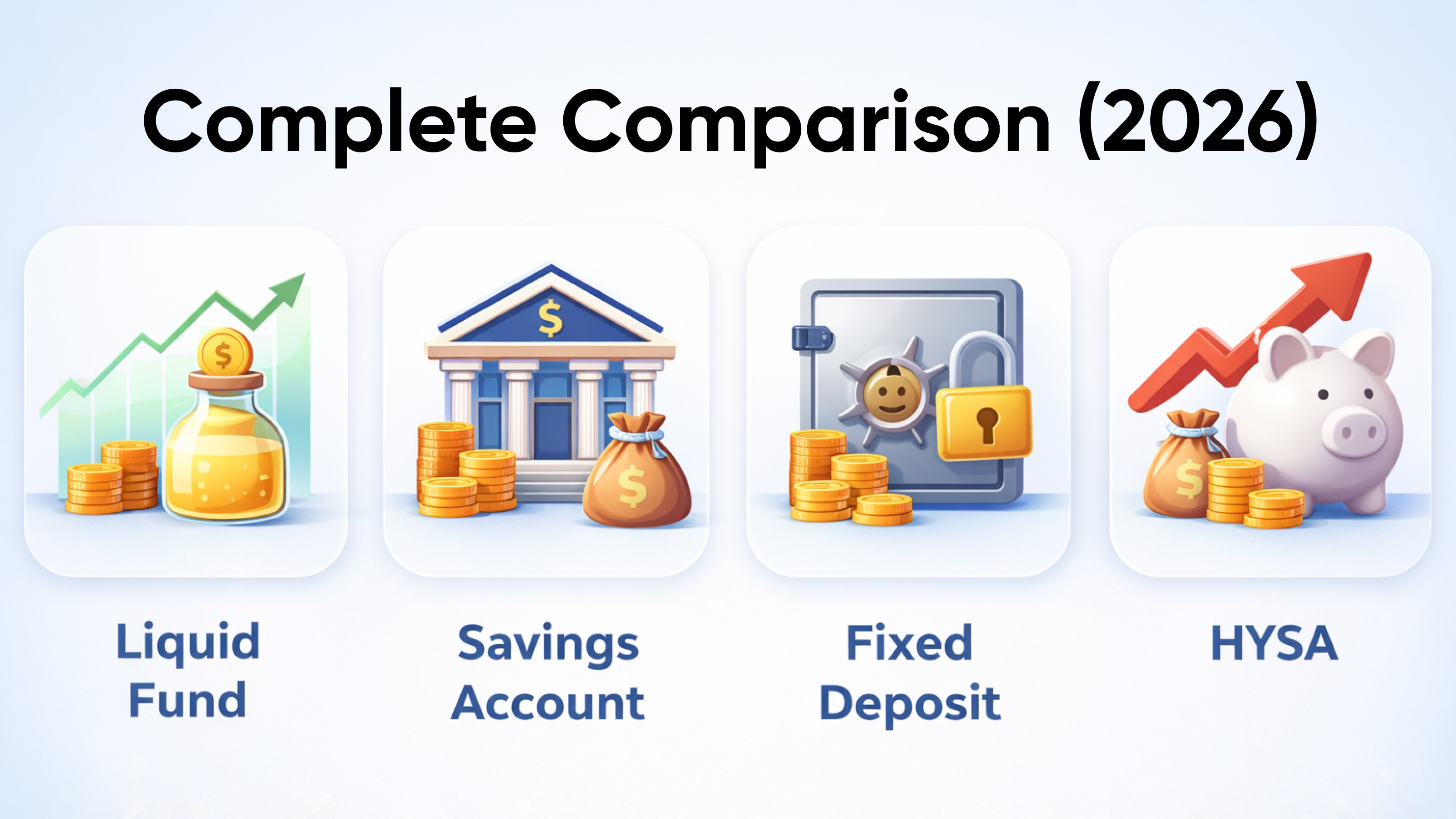
If you’re trying to decide where to park money in 2026, you’ve probably seen four common options:
Savings account
Fixed deposit (FD)
Liquid mutual funds
Multipl HYSA (Higher-Yield Spending Account)
Each one sounds “safe”. Each one claims liquidity.
But they are built for very different jobs.
This guide breaks down returns, liquidity, safety, and use cases so you can choose the right place for your money, especially for emergency funds, short-term goals, and idle cash.
TL;DR: Which is better for parking money in 2026?
If you want the short answer:
Savings account → for daily transactions only
Fixed deposit → for locked money you won’t touch
Liquid mutual fund → for short-term parking with better returns
Multipl HYSA → for money you plan to spend, but not immediately
Quick answer: the right choice depends on when you need the money, how often you may withdraw it, and whether you want your idle balance to earn more while staying accessible.
The Four Options at a Glance
Option | Typical Returns (2026) | Liquidity | Lock-in | Risk Level | Best For |
|---|---|---|---|---|---|
Savings Account | ~2.5–3.5% | Instant | None | Very low | Transactions |
Fixed Deposit | ~6–7% | Low | Yes | Low | Locked surplus |
Liquid Mutual Fund | ~6–7%* | High | None | Low, but market-linked | Short-term parking |
HYSA | ~6–7%* + spending benefits | High | None | Low, but market-linked | Spending + parking |
*Based on historical liquid fund category returns; not guaranteed.
Let’s break these down properly.
1. Savings Account

Savings accounts are the default place where money lands, but they’re not designed for parking money.
Pros
Instant access
Capital safety (bank-backed)
Simple and familiar
Cons
Low returns (often below inflation)
Idle money loses value over time
Not optimised for short-term holding
Best use
Salary credit
Daily expenses
Buffer for immediate payments
Not ideal for parking money beyond a few days.
2. Fixed Deposit (FD)

Fixed deposits offer higher returns, but only if you’re willing to lock your money away.
Pros
Predictable returns
Higher than savings account
Perceived safety
Cons
Lock-in period
Penalties on premature withdrawal
Poor liquidity for emergencies
Best use
Money you know you won’t need
Conservative, long-term surplus
FDs work when flexibility doesn’t matter.
For short-term or uncertain needs, they fall short.
3. Liquid Mutual Funds for Short-Term Parking
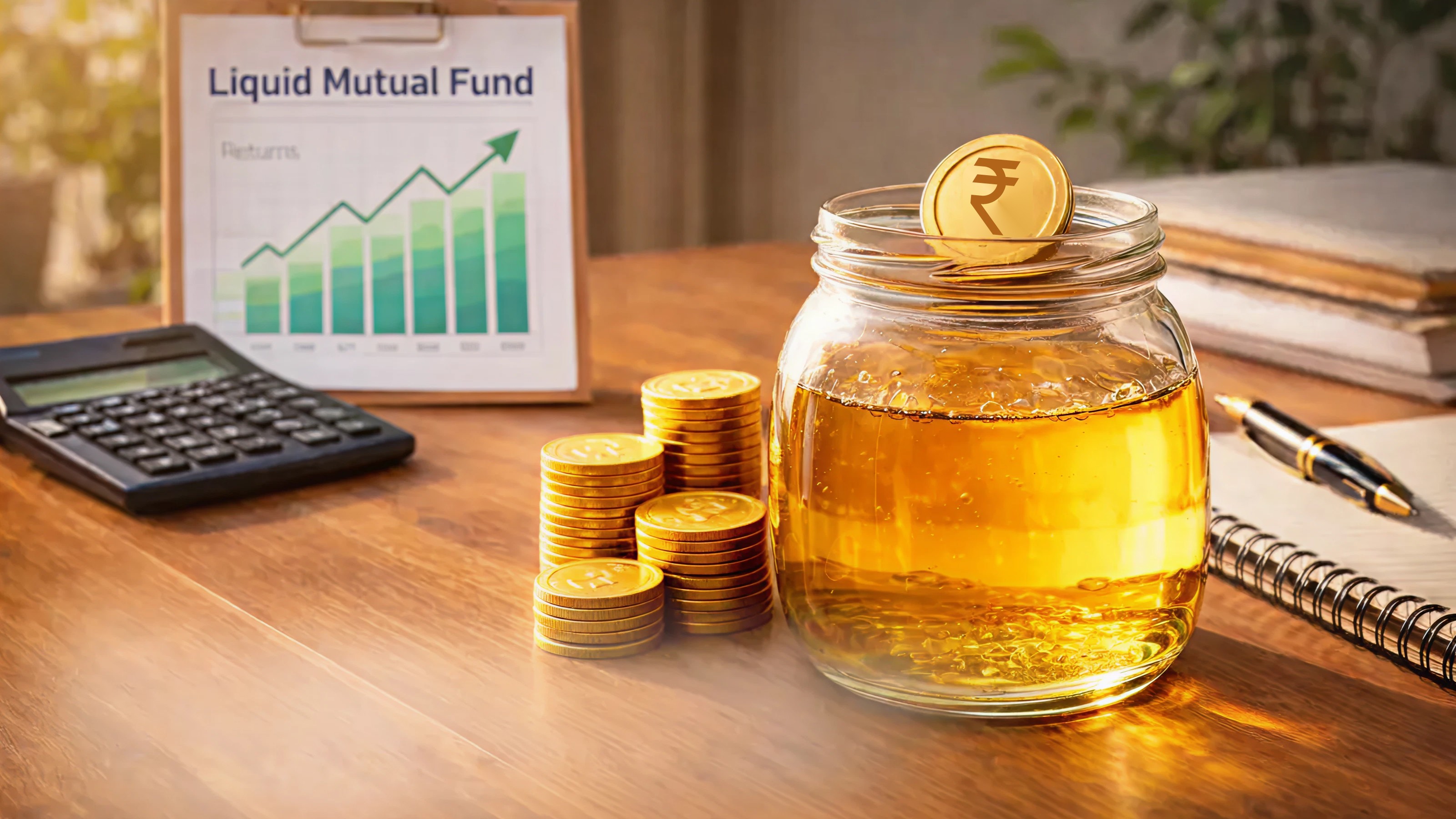
Liquid mutual funds invest in very short-term, high-quality debt instruments. They are built specifically for temporary parking of money.
Pros
Historically higher returns than savings accounts
Low volatility
No lock-in
Suitable for short-term money
Cons
Not bank deposits (returns not guaranteed)
Redemption timelines vary (same-day to T+1)
Best use
Emergency funds
Short-term surplus
Money waiting to be deployed
Liquid funds are often a better alternative to savings accounts for parking money, but still require you to actively redeem and manage them.
4. Multipl HYSA (Higher-Yield Spending Account)

A Multipl HYSA combines liquid mutual funds + spending access into one structure.
Instead of treating liquid funds as an “investment”, a HYSA treats them as a better place for spending money to wait.
How it works
Money is invested in liquid mutual funds
Earns returns similar to liquid funds (~6–7%, historically)
Remains fully liquid
Can be withdrawn instantly or near-instantly
Includes spending-linked benefits like brand discounts when you spend (~8-10%)
Best use
Money you plan to spend soon
Monthly shopping budgets
Travel planning
EMI or bill buffers
A HYSA is essentially a modern upgrade over letting spending money sit in a savings account at ~2.5%.
Returns Comparison (Realistic View)
Option | Returns Potential | Inflation Beating? |
Savings Account | Low | ❌ |
Fixed Deposit | Medium | ⚠️ (depends on inflation) |
Liquid Fund | Medium-High | ✅ (historically) |
HYSA | Medium-High + extra value | ✅ |
Returns alone shouldn’t drive the decision, but for idle money, they matter.
Liquidity Comparison
Option | Access Speed |
Savings Account | Instant |
Fixed Deposit | Slow (penalty applies) |
Liquid Fund | Same day / T+1 |
HYSA | Instant or near-instant |
If access matters, FDs are usually the weakest option.
Safety & Risk (Important Clarity)
Savings accounts → Bank-backed, lowest risk
FDs → Bank-backed, low risk
Liquid funds / HYSA → Market-linked, low risk but not zero
Liquid funds are regulated by SEBI and invest in high-quality instruments, but they are not guaranteed like bank deposits.
For short-term parking, they are widely considered appropriate, but expectations should be realistic.
Taxation: A Simple Difference to Keep in Mind
Taxes can affect your final post-tax return, especially if you’re comparing FD vs liquid fund vs HYSA for short-term money.
Savings account interest is taxable as per your income tax slab
FD interest is taxable as per your income tax slab
Liquid fund / HYSA returns are market-linked and taxation depends on prevailing mutual fund tax rules
So while headline returns matter, post-tax returns and ease of access also matter when you choose where to park idle money.
Which Option Should You Choose?
Choose a Savings Account if:
You need instant transactional access
Returns don’t matter for this money
Choose an FD if:
You won’t touch the money
You want predictable returns
Choose Liquid Funds if:
You want better returns than savings
You’re okay managing redemption manually
Choose a Multipl HYSA if:
The money is meant to be spent
You want it to earn while it waits
Get additional brand discounts when you spend
Liquidity and ease matter
FAQs
Is HYSA better than a savings account for idle money?
If the money is not needed for daily transactions and you want it to stay accessible while aiming for better return potential, a HYSA can be more efficient than leaving it in a low-yield savings account.
Are liquid mutual funds safer than fixed deposits?
Not exactly. FDs are bank-backed and offer predictable returns, while liquid funds are market-linked and not guaranteed. Liquid funds are generally considered low-risk for short-term parking, but they still carry some risk.
Which option is best for an emergency fund: savings account, FD, liquid fund, or HYSA?
For emergency money, liquidity matters most. Many people prefer a mix: some money in a savings account for immediate access, and some in a liquid fund or HYSA for better use of idle balances.
Final Take
Most people don’t have a “saving problem”.
They have a parking problem.
Money that’s waiting to be used often sits in the wrong place, earning too little, for too long.
The smarter approach in 2026 isn’t choosing one option for all money, but matching the tool to the job:
Transactions → savings account
Locked surplus → FD
Short-term parking → liquid funds
Spending money → Multipl HYSA
Once you separate these roles, the choice becomes obvious.
Stop treating all money the same.Choose the right place for the job.
Multipl is a AMFI registered Mutual Fund Distributor (ARN No. 319633). *Based on historical returns of Liquid Fund category.
Disclaimer: Mutual Fund investments are subject to market risks, read all scheme related documents carefully.