•
1 min read
Liquid Fund Safety: Can Liquid Funds Lose Money?
Liquid Fund Safety: Can Liquid Funds Lose Money?
When people first hear about liquid funds, they usually fall into one of two camps. One camp thinks liquid funds are basically “savings accounts with higher returns.” The other gets nervous the moment they hear the words mutual fund and assumes the money could swing wildly like stocks.
The truth sits in the middle.
If you are trying to understand liquid fund safety, start here: liquid funds are generally low-risk, but they are not risk-free. They are built to be relatively stable. They are often used for short-term money. But they do not come with the same kind of guarantee as a bank deposit. That difference matters.
For many Indians, this is a practical question. You may be wondering: Are liquid funds safe in India? Can liquid funds lose money? Do liquid funds ever lose value? Is it okay to keep salary in liquid fund? Can I withdraw money from a liquid fund at any time?
This guide answers those questions in simple terms, without overpromising. It covers how liquid funds work, what risks actually exist, when losses can happen, and where they may fit in real life, whether for emergency money, a monthly cash buffer, or temporarily parking large sums.
TL;DR: Are liquid funds safe?
Liquid funds are low-risk debt mutual funds, not guaranteed products.
They invest in very short-term money market instruments with maturities of up to 91 days.
Yes, liquid funds can lose money, but losses are usually linked to credit events, valuation changes, or extreme market stress.
They are often used for short-term parking of money, but they are not a full substitute for a savings account.
For money needed instantly, a bank account is usually better. For money sitting idle for a short period, a liquid fund may be considered based on your comfort with small risk.
What is a liquid fund in simple terms?
A liquid fund is a type of debt mutual fund that invests in very short-term money market instruments. These instruments usually mature within up to 91 days.
In simple language, a liquid fund takes money from investors and parks it in short-duration debt instruments such as:
Treasury bills
Commercial papers
Certificates of deposit
Short-term corporate debt
Other money market securities
Because these investments mature quickly, liquid funds are usually less sensitive to interest-rate changes than longer-duration debt funds.
That is why they are often considered for short-term goals or temporary parking of money.
If you are still exploring how different savings and investment buckets work together, you may also find it helpful to read:
Are liquid funds safe in India for short-term money?
The short answer: liquid funds are relatively safe, but not guaranteed safe.
When people ask “are liquid funds safe in India?”, they are usually comparing them with one of these:
A savings account
A fixed deposit
Cash left idle in the bank
Equity mutual funds
Compared with equity funds, liquid funds are much lower risk. Compared with savings accounts and bank fixed deposits, they come with a different safety structure.
Here is the key difference.
A bank savings account has a deposit insurance framework through DICGC, but only up to the applicable limit and subject to conditions. A liquid fund does not have deposit insurance because it is not a bank deposit.
Instead, a liquid fund’s safety depends on:
The quality of securities it holds
The maturity profile of those securities
Fund management discipline
Market liquidity at the time of stress
Creditworthiness of issuers
So if someone says liquid funds are “completely safe,” that is not accurate. If someone says they are “too risky for short-term money,” that is also too broad.
Here is the key difference
A bank savings account has a deposit insurance framework through DICGC, but only up to the applicable limit and subject to conditions. A liquid fund does not have deposit insurance because it is not a bank deposit.
Instead, a liquid fund’s safety depends on:
The quality of securities it holds
The maturity profile of those securities
Fund management discipline
Market liquidity at the time of stress
Creditworthiness of issuers
So, if someone says liquid funds are “completely safe,” that is not accurate.
But if someone says they are “too risky for short-term money,” that is also an oversimplification.
How does a liquid fund work in India?
To understand liquid fund risk in India, you first need to know how the fund generates returns.
A liquid fund earns money mainly from the interest or accrual income on the short-term debt instruments it holds. Since these securities mature quickly, the fund typically keeps rotating into new short-term instruments.
The NAV, or net asset value, changes daily based on:
Interest earned
Valuation of securities
Fund expenses
Any changes in market perception of risk
Credit events, if any
Because the securities are short term, the NAV movement is usually small and gradual. That is why liquid funds are often seen as a parking place for money you may need soon.
If you are comparing temporary parking options, related reads on saving vs investing, goal-based investing, and building financial discipline can help you place liquid funds in a broader context.
Can liquid funds lose money?
Yes. Liquid funds can lose money, though such losses are usually small and less common than in long-duration debt funds or equity funds.
This is one of the most important truths investors should understand.
A lot of explainers say liquid funds are low risk, but stop there. The more useful question is: how exactly can a liquid fund lose value?
There are three broad ways.
1. Credit risk
This is the biggest risk people often overlook.
A liquid fund invests in debt issued by governments, banks, financial institutions, and companies. If one of those issuers faces financial trouble, gets downgraded, delays repayment, or defaults, the value of that security may fall.
That decline can affect the fund’s NAV.
So if you are asking “what happens to money invested in a liquid fund?”, the answer is: your money is not sitting in a vault. It is invested in a basket of short-term debt instruments. If one of those instruments has a credit problem, the fund can take a hit.
Example
Imagine a fund holds short-term paper from a company that suddenly faces a serious cash flow problem. The market starts doubting whether the company can repay on time. The security may be marked down. That can lead to a temporary or even lasting NAV impact.
This is why portfolio quality matters.
2. Interest-rate risk
Compared with many other debt funds, liquid funds have low interest-rate risk, but not zero.
When interest rates move, bond prices can also move. Since liquid funds invest in very short-duration instruments, the impact is typically limited. Still, there can be small mark-to-market changes.
That means do liquid funds ever lose value? Yes, they can—sometimes because of valuation changes, even without a default.
The good news is that the short maturity profile tends to reduce the scale and duration of such fluctuations.
3. Liquidity and timing risk
Liquid funds aim to offer relatively easy access to money, but there can still be practical timing issues.
For example:
Redemption proceeds may not be instant in every case
Weekend and holiday cut-offs matter
Very large withdrawals during market stress can affect liquidity handling
Exit load may apply for very short holding periods in some funds
So while liquid funds are called “liquid,” that does not mean “cash in hand this second under all conditions.”
This is why use-case matters.
Do liquid funds ever lose value in daily life?
Yes, but the context matters.
In normal market conditions, liquid funds are designed to be relatively stable. Daily changes are typically small. Most investors do not experience the kind of visible volatility seen in equity funds.
However, losses can happen when:
A holding gets downgraded
An issuer defaults or delays repayment
Market conditions tighten sharply
The fund has taken higher credit exposure than the investor realized
So if you are evaluating liquid fund safety, the better framing is not “can this ever fall?” but rather:
How likely is a fall?
How severe could it be?
How suited is the fund to my use case?
Am I confusing low-risk with guaranteed?
That is the real decision framework.
Liquid fund vs savings account: quick comparison
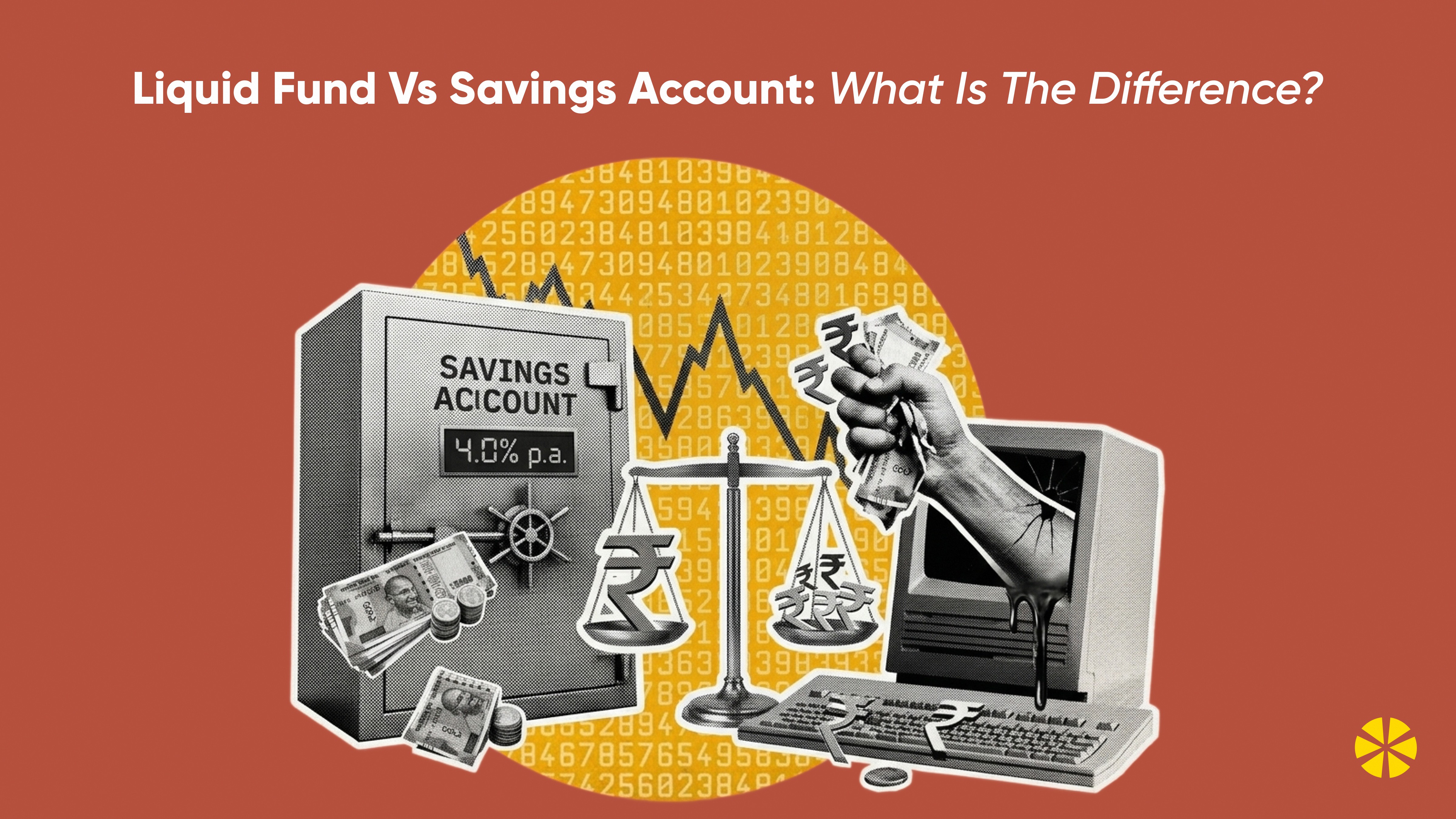
This is one of the most searched questions for a reason.
Feature | Savings Account | Liquid Fund |
|---|---|---|
Product type | Bank deposit | Debt mutual fund |
Capital guarantee | No market NAV fluctuation in normal use | No guarantee; NAV can fluctuate slightly |
Deposit insurance | DICGC cover applies up to applicable limits and conditions | No deposit insurance |
Return type | Fixed by bank, usually lower | Market-linked, not fixed |
Access to money | Immediate for daily use | Redemption-based; timing depends on cut-offs and scheme rules |
Best use case | Bills, ATM, UPI, emergency access | Short-term parking of idle money |
Risk level | Low for access cash | Low, but not risk-free |
This also answers a related prompt: why should I not keep large amounts in a savings account?
Because idle money in a savings account may offer convenience, but it can also carry an opportunity cost. If large balances sit unused for weeks or months, they may earn less than they could in other low-risk, short-term instruments.
That said, convenience has value too. Not all money should be optimized for return.
A practical structure may involve:
money for daily transactions in a savings account,
a short-term parking bucket for near-term but not immediate use,
and separate allocations for long-term wealth building.
You can explore this thinking further through goal-based money management, smart savings habits, and planning for short-term needs.
What is the opportunity cost of keeping money in a savings account?
Opportunity cost is simply what you give up by choosing one option over another.
If you keep a large idle sum in a savings account for months, you may gain convenience but lose the chance to earn relatively better returns elsewhere.
For example, if you leave a bonus, idle salary, or unallocated goal money in a low-yield account, the money may not work efficiently. Over time, the difference may seem small month to month but meaningful over years.
That does not mean the savings account is wrong. It means every rupee should have a purpose.
Immediate spending money: savings account
Emergency access money: partly in savings, partly in carefully chosen low-risk buckets
Near-term parked money: possibly liquid fund depending on comfort and timing
Long-term goals: separate investment products
Can I withdraw money from a liquid fund at any time?
Usually, yes, but with conditions.
This is where many people misunderstand liquid funds.
When investors ask “can I withdraw money from a liquid fund at any time?”, the practical answer is:
You can place a redemption request on business days
The processing timeline depends on cut-off times and fund rules
Proceeds may arrive the same day, next day, or per scheme norms
Some instant redemption features may exist, subject to limits and availability
It is not the same as swiping a debit card from your savings account
So if the money is needed immediately, such as for a medical emergency at 2 a.m., the savings account remains essential.
That is why many planners prefer a layered emergency strategy instead of putting the entire emergency reserve in one place.
Is it okay to keep one or two months salary in a liquid fund?
It can be okay for some people, but not for everyone.
This is one of the most relevant use-case questions.
If by “one or two months salary” you mean:
money not needed for daily spending,
a temporary buffer,
salary parked after expenses are already separated,
or idle cash waiting for deployment,
then a liquid fund may be reasonable depending on your liquidity needs and risk comfort.
But if this is:
your rent money,
EMI money,
school fee money,
emergency surgery reserve,
or the only cash you have,
then keeping all of it in a liquid fund may not be ideal.
A better way to think about it
Ask yourself three questions:
1. When might I need this money?
If the answer is “any hour, any day,” keep it in the bank.
2. Can I tolerate a very small NAV fluctuation?
If even a tiny dip will make you anxious, a liquid fund may not suit your mindset for this money.
3. Is this money for access or optimization?
If access matters most, savings account wins. If the money is idle for a short period and you want better deployment, a liquid fund may be considered.
When liquid funds may make sense
A liquid fund may fit if you want to:
Park idle cash for a short duration
Hold money meant for a near-term goal
Keep part of a broader emergency corpus in a low-risk, non-equity bucket
Temporarily park a bonus, incentive, or business inflow
Avoid keeping unnecessarily high idle balances in a savings account
When liquid funds may not be the best fit
A liquid fund may not be ideal if:
You expect zero possibility of value fluctuation
You are not comfortable with market-linked products
The money is meant for critical payments due immediately
You do not want to track redemption timing, cut-off windows, or fund quality
How to evaluate liquid fund safety before investing
If you want to assess liquid fund safety more carefully, look at:
1. Portfolio quality
Check the credit quality of the papers held.
2. Exposure concentration
Avoid blindly trusting a fund with concentrated exposure to a few issuers.
3. Fund mandate and style
Some funds may stay conservative; others may stretch for slightly higher yield.
4. AUM and liquidity profile
Scale alone does not guarantee safety, but it helps to understand the fund’s size and investor mix.
5. Exit load and redemption norms
Important if you are parking money for very short periods.
6. Your own use case
The same fund may be suitable for idle cash but not for core emergency cash.
This is the part many investors skip. They ask, “Is the product safe?” when the more useful question is, “Is this product safe enough for this specific purpose?”
So, are liquid funds safe enough for emergency money?
Partly, in some cases.
A balanced answer is better than a simplistic one.
For emergency money, many people prefer a split approach:
some amount in a savings account for immediate access,
some amount in a low-risk short-term bucket for money not required instantly.
This avoids the mistake of chasing slightly better returns at the cost of access when access is the whole point of an emergency fund.
If you are building your money stack from scratch, resources around emergency planning, cash flow discipline, savings goals, and financial resilience can help create the right structure before picking products.
Conclusion: low risk does not mean no risk
Liquid funds deserve neither blind trust nor unnecessary fear.
They are not risk-free, and yes, liquid funds can lose money. But they are also designed to be among the lower-risk categories within market-linked investment products, especially for short-term parking of money.
If you remember one thing from this guide, let it be this:
Liquid fund safety depends on both the fund and the purpose.
A liquid fund may be useful for short-term idle cash, temporary salary parking, or part of a broader cash-management strategy. But it is not a perfect replacement for a savings account, and it is not the right home for every rupee.
The smartest approach is not to ask whether liquid funds are “safe” in absolute terms. It is to ask:
What risks exist?
How small or meaningful are they?
How quickly might I need the money?
What role is this money supposed to play?
That is how better financial decisions are made, by matching the product to the purpose.
FAQs
Are liquid funds safe in India?
Liquid funds are generally considered low-risk in India because they invest in short-term debt instruments. But they are not guaranteed or risk-free. They can face credit risk, small valuation changes, and redemption timing limitations.
Do liquid funds ever lose value?
Yes. Liquid funds can lose value, usually in small amounts, if a security in the portfolio is downgraded, defaults, or faces market stress. Losses are typically less dramatic than equity funds, but they are possible.
Can liquid funds lose money even for short durations?
Yes. Even over short durations, a liquid fund can show a small dip in NAV. That said, their short maturity profile generally reduces volatility compared with many other debt categories.
What is the difference between a liquid fund and a savings account?
A savings account offers immediate banking access and a different regulatory structure. A liquid fund is a market-linked mutual fund product with no deposit insurance like a bank deposit. It may offer better deployment for idle cash, but comes with some risk.
Can I withdraw money from a liquid fund at any time?
You can usually redeem on business days, subject to cut-off times and scheme rules. However, access is not always as instant as money in a savings account.
Is it okay to keep salary in liquid fund?
It depends on how soon you need the money. If it is idle salary not needed immediately, it may be considered. If it is for rent, bills, or urgent expenses, a savings account is usually more suitable.
Are liquid funds safer than fixed deposits?
They are different products. Fixed deposits offer predetermined returns and bank deposits may have insurance cover up to applicable limits and conditions. Liquid funds are market-linked debt mutual funds, so returns are not fixed and small NAV fluctuations are possible.
How long should I stay invested in a liquid fund?
Liquid funds are generally considered for very short holding periods, such as temporarily parking money for days, weeks, or a few months. They are usually more suitable for short-term surplus cash than for long-term wealth creation.
Can liquid funds give negative returns for one day?
Yes. A liquid fund can show a small negative return on a particular day because of mark-to-market valuation changes, expense adjustments, or a credit-related event. That possibility is one reason liquid funds should be seen as low-risk, not risk-free.
Multipl is a AMFI registered Mutual Fund Distributor (ARN No. 319633). *Based on historical returns of Liquid Fund category.
Disclaimer: Mutual Fund investments are subject to market risks, read all scheme related documents carefully.