•
1 min read
Best Cashback Apps in India That Save More | Multipl

Best Cashback Apps in India That Actually Save You More
If you are searching for the best cashback apps India users rely on, stop looking for one winner. Compare how each app actually saves you money. Some apps reward UPI payments. Some give shopping cashback through affiliate links. Some work like discount marketplaces, and some tie rewards to cards. On the surface, they can look similar. In practice, the money you actually keep can be very different.
That difference matters. Cashback often shows up after you spend, with limits, exclusions, delayed credit, or redemption rules that shrink the real benefit. A smarter comparison starts with the cashback model, then the app, and then one more question many roundups miss: what happens to the money sitting idle before you spend it?
Best cashback apps India readers should compare by cashback model, not just brand name
Most listicles rank apps by popularity. That is a weak way to choose a money-saving app.
A better way is to ask four practical questions:
Where does the reward come from?
Is it funded by a UPI app, a shopping affiliate network, a merchant campaign, or a card issuer?When do you get the value?
Some apps give instant discounts. Some show pending cashback for weeks. Some lock rewards behind minimum redemption thresholds.How flexible is the reward?
Cash sent to bank feels very different from wallet balance, coins, vouchers, or category-specific credits.Does it save you on spending you would make anyway?
The best app for cashback is not the one with the loudest headline rate. It is the one that fits your real spending pattern without nudging you to buy extra.
This is why two apps can both advertise rewards and still give very different results. A shopping cashback app may work well for planned online purchases. A UPI rewards app may help with daily use, but rewards are often smaller and less predictable. A merchant discount app can beat both if you already shop with those brands. And if you keep money aside for spends in advance, another layer matters: earning on that money before you pay.
The 4 cashback models in India: UPI rewards, affiliate cashback, merchant discounts, and card-linked rewards
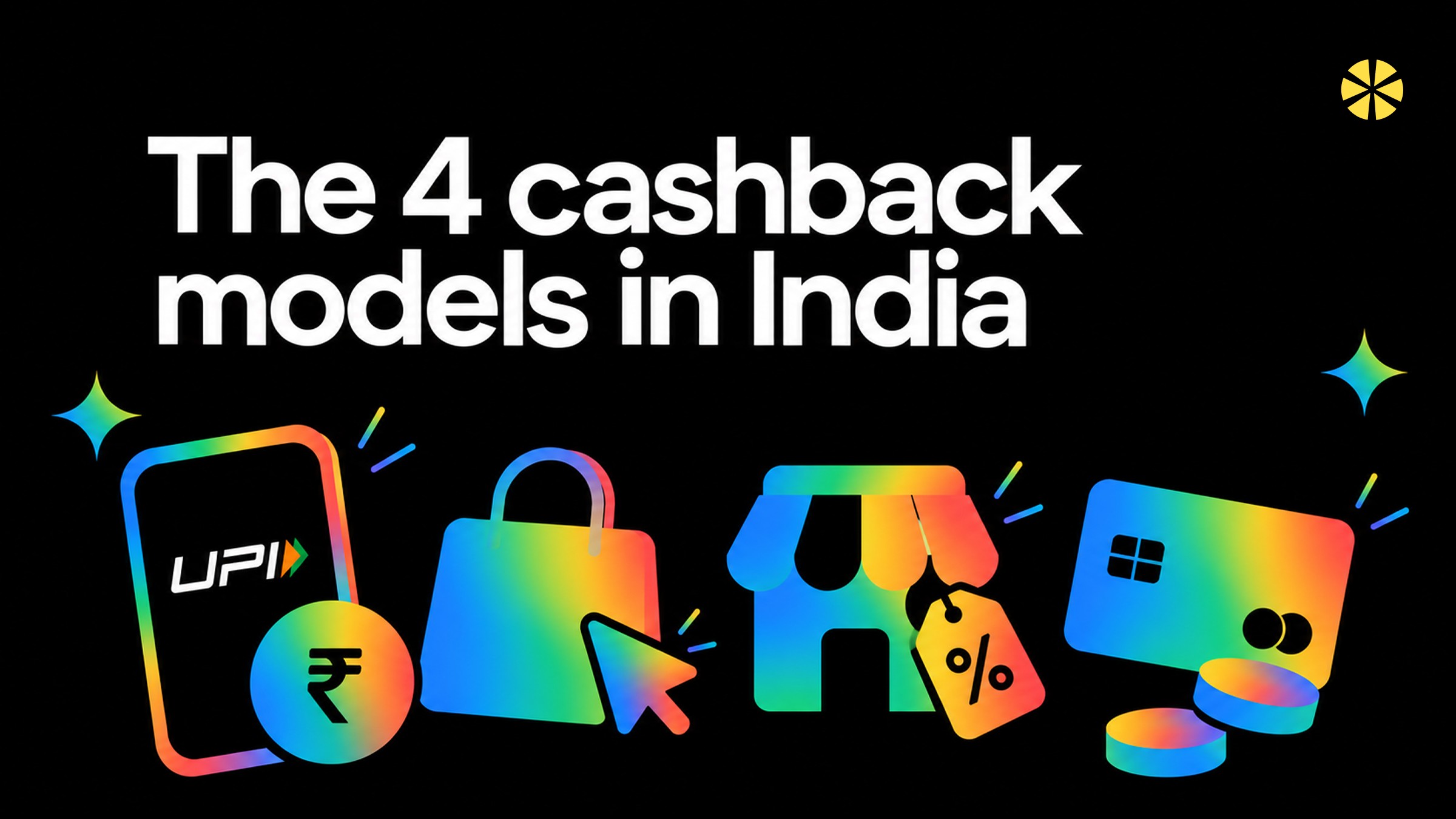
UPI rewards apps
These are the apps most people see first. They sit at the point of payment and sometimes offer scratch cards, cashback campaigns, referral rewards, bill-pay offers, or partner promotions for scans, transfers, and recharges.
Their strength is convenience. You are already using UPI, so any reward feels easy. Their weakness is unpredictability. You may get a small reward on one transaction and nothing on the next. Many offers are promotional, not permanent.
UPI cashback offers work best for:
Routine Bill Payments
Mobile Recharges
Small Everyday Merchant Payments
Short-Term Promotional Campaigns
They work less well if you expect steady, repeatable savings every month.
Affiliate cashback apps
These apps track your purchase when you click through their platform to a retailer, marketplace, travel site, or brand store. If the order is eligible and not returned, part of the commission comes back to you as cashback.
This is one of the most common shopping cashback apps models in India. It can work well for categories like fashion, electronics, beauty, travel bookings, and big sale events.
Their strengths:
Higher Cashback On Selected Categories
Wide Merchant Coverage
Useful For Planned Online Shopping
Their trade-offs:
Cashback Can Stay Pending For Weeks
Returns, Coupon Conflicts, Or Tracking Breaks Can Void Rewards
Some Earnings Come As Wallet Credit Or Gift Cards Instead Of Cash
Merchant discount apps
These platforms focus on direct savings with partner brands. Instead of waiting for cashback to settle later, users often get upfront value through gift cards, discount codes, exclusive pricing, or partner offers.
This model is easier to understand because the savings are visible before or during checkout. If you already know the brand you are going to use, merchant discounts can beat a small post-purchase cashback.
This model is useful for:
Grocery Orders
Food Delivery
Travel Bookings
Electronics And Fashion Purchases
Healthcare And Lifestyle Spending
Card-linked rewards apps
These apps or ecosystems connect value to debit cards, credit cards, or card networks. The reward may appear as statement credit, reward points, miles, vouchers, or merchant offers.
The value can be strong for disciplined users, especially on large monthly spending. Still, card-linked programs often come with category caps, annual fees, redemption friction, and the risk that chasing rewards pushes you to overspend.
If you carry card balances, cashback loses much of its charm very quickly. Interest costs can wipe out the reward.
Affiliate cashback apps vs UPI cashback apps: which gives better real-world value?
For most users, affiliate cashback apps beat UPI rewards on planned online purchases, while UPI apps are more useful for convenience-led everyday payments.
Here is the practical split.
Where affiliate cashback apps win
Affiliate apps usually win when your purchase is:
High Value
Planned In Advance
Made Online Through A Supported Merchant
Not Likely To Be Cancelled Or Returned
If you are booking travel, buying appliances, ordering fashion during sale season, or placing a high-ticket electronics order, even a modest cashback percentage can add up.
Where UPI cashback apps win
UPI apps work better when your payment is:
Offline Or Hyperlocal
Low Value But Frequent
Part Of Your Existing Daily Flow
Linked To Limited-Time Reward Campaigns
For tea, groceries, pharmacy runs, metro recharges, utility bills, or neighbourhood store payments, UPI rewards are easier to earn because there is no extra click-out journey.
Where both models fall short
Both models still focus on savings after you spend. So the money waiting in your bank account before the purchase is usually doing very little. For many people, that is the bigger missed opportunity.
If you set aside ₹10,000, ₹20,000, or more every month for planned and everyday spending, one-time cashback does not solve the idle-cash problem. That is where a spend-and-save approach can give you a better overall outcome than chasing scattered rewards.
Best cashback apps in India across each cashback model
There is no single best cashback app for every user. The better question is which app type fits the way you spend.
Best for UPI and bill-payment rewards
Apps in this category suit users who want everyday convenience first and occasional rewards second. They are useful for utility bills, recharges, merchant QR payments, and everyday UPI transfers where available offers apply.
Choose this type if you want:
Simple Everyday Use
Occasional UPI Cashback Offers
Minimal Change To Your Payment Habits
Skip this type as your main savings strategy if you expect predictable monthly cashback from every transaction.
Best for shopping cashback apps
Affiliate-led cashback apps tend to work best for e-commerce users who compare merchants before buying. If your household shops online often, these can bring decent value on categories like fashion, beauty, gadgets, travel, and sometimes groceries.
Choose this type if you:
Shop Online Frequently
Are Comfortable Waiting For Cashback Confirmation
Can Follow Tracking Steps Carefully
Prefer Planned Purchases Over Impulse Buys
Best for merchant discounts and brand offers
This category can outperform classic cashback if you already spend with the partner brands. Upfront discounts are easier to value than pending rewards, and they avoid some of the tracking issues common in affiliate cashback.
Choose this type if you:
Already Buy From Known Brands
Want Savings Visible Before Payment
Use Gift Cards Or Brand Offers Comfortably
Care More About Net Price Than Cashback Labels
Best for card-linked rewards
This category suits users who pay cards in full and want rewards stacked on regular monthly expenses. It can be valuable for fuel, dining, travel, premium retail, and household bills, depending on the card benefits.
Choose this type if you:
Never Revolve Credit
Understand Reward Caps And Terms
Can Redeem Points Efficiently
Have Spending Levels That Justify The Setup
Best for people who want savings before spending
This is where Multipl stands apart from typical cashback apps india readers usually compare. Instead of waiting for a reward after checkout, Multipl helps your spend-ready money earn before you spend it by investing it in expert-selected liquid mutual funds through its Higher-Yield Spending Account.
That means money you keep aside for food delivery, travel, gadgets, shopping, bills, school fees, a wedding, or routine UPI spending does not have to sit idle in a low-yield savings account. It can earn up to 7%* based on historical liquid-fund performance until the day you need it, and users can also access partner-brand discounts on eligible spends. This is different from one-time cashback because it works on the balance you have set aside, not only on the transaction you completed. The Higher-Yield Spending Account is a mutual-fund-powered spending account, not a bank savings account or a bank deposit, and it is not insured like a bank deposit.
How to compare cashback rates, redemption rules, exclusions, and expiry before you install
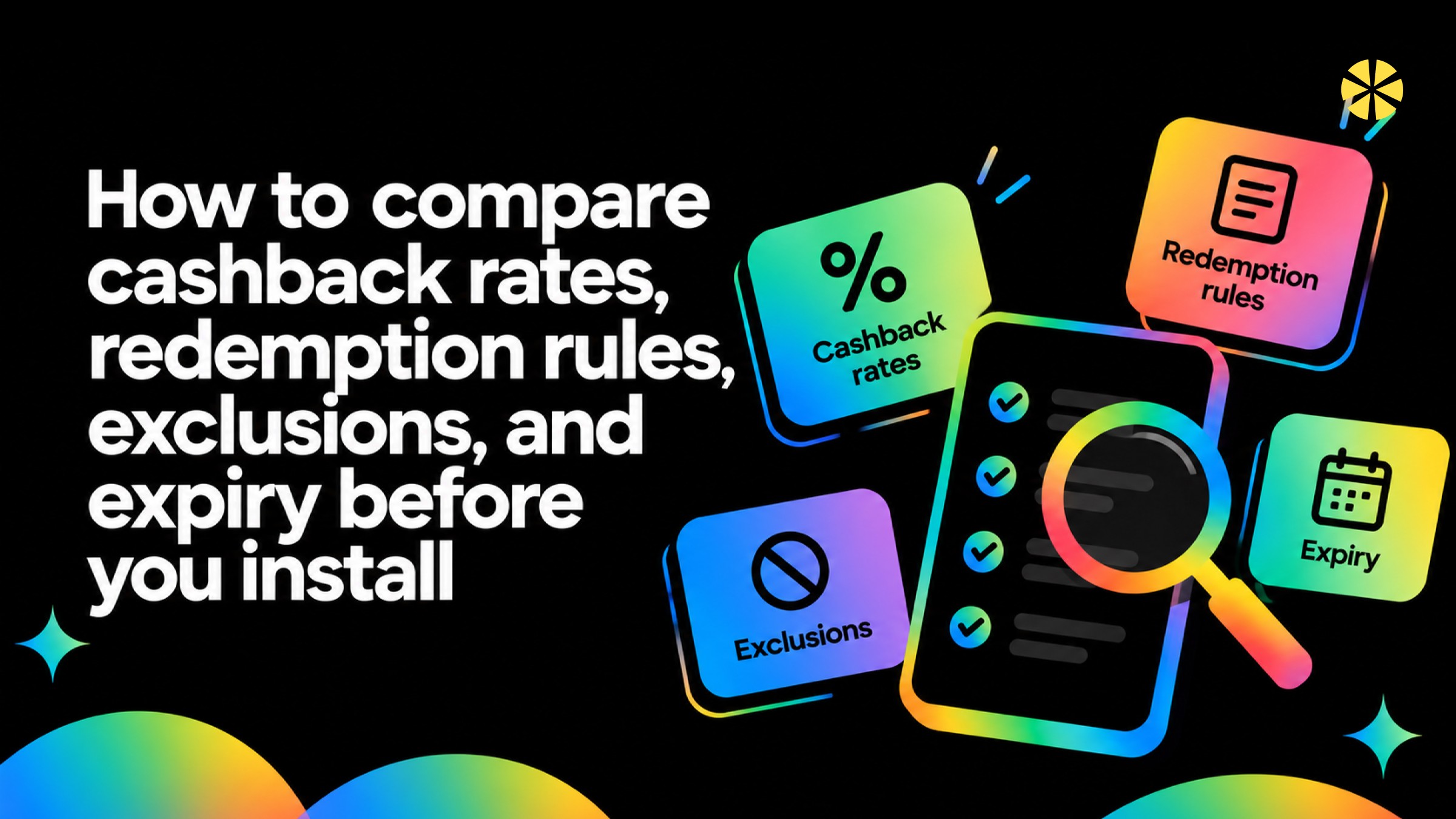
A cashback headline means very little without the conditions under it. Before you install any app, check these points.
Cashback rate
A flat 2% with few restrictions can be better than a flashy up to 20% offer that only applies to one merchant, one payment method, or one campaign window. Always look for the normal earning range on categories you actually use.
Redemption format
Ask what form the reward takes:
Bank Transfer
Wallet Balance
Gift Card
Points
Merchant Credit
Voucher
Cash in bank is easiest to value. Wallet balances and points often feel larger than they are because they can only be used in limited ways.
Minimum withdrawal threshold
Many cashback apps india users try end up trapping small balances behind minimum redemption rules. If the threshold is high and your earning rate is low, the app may never pay out meaningful value.
Confirmation timeline
Affiliate cashback can stay pending for weeks or even longer because the merchant has to validate the order. If you want instant savings, direct discount models are usually easier to trust.
Exclusions and tracking issues
Read the exclusions carefully. Common examples include:
Returned Or Cancelled Orders
Purchases Made With Unapproved Coupons
Orders In Excluded Categories
Repeat Purchases From The Same Offer
Tracking Failure Due To Ad Blockers Or App Switching
A cashback rate only matters if the transaction qualifies.
Expiry rules
Some rewards expire surprisingly fast. If an app uses coins, points, promotional credits, or merchant vouchers, check the validity period before you count it as savings.
Do cashback apps really help you save money or just nudge you to spend more?
They can do either.
Cashback apps help when they sit on top of spending you already planned to make. They hurt when they become the reason you buy. That shift is easy to miss because rewards make a purchase feel cheaper even when the total outflow still rises.
A simple test works well here. Ask yourself: would I still buy this today if there were no cashback? If the answer is no, the app is not helping you save money. It is helping you justify spending.
The most useful apps to save money in India are the ones that fit naturally into existing spending:
Bill Payments You Already Make
Travel Bookings You Already Need
Groceries You Were Going To Order Anyway
Brand Purchases You Had Already Planned
Discipline matters more than app choice. The app can improve the economics of a purchase, but it cannot fix impulse buying.
What the best cashback apps in India still cannot do with idle spending money
This is the blind spot in most cashback roundups.
Cashback usually starts at or after checkout. Before that point, your monthly spending money often sits in a regular savings account earning around 2 to 3.5%. If you are parking money for rent, bills, shopping, food delivery, vacations, gadgets, school fees, an iPhone, flights, or festive spending, that waiting period creates a missed earning window.
The best cashback apps in India still do not solve that by default. They can reduce the cost of a purchase, but they usually do not help the purchase budget grow while it waits.
That gap matters more as your monthly spending pool gets larger. A few scratch-card wins or delayed affiliate rewards can feel good, but they may be smaller than what your parked money could have earned over time in a better setup.
Multipl was built around that exact gap. Its approach is to make spending money work harder before it is spent, through a mutual-fund-powered spending account based on liquid funds, while also offering redeemable brand offers on eligible goals and redemptions. No investment is zero-risk, and returns are market-linked, but this model addresses a part of the savings journey standard cashback apps leave untouched.
Multipl vs typical cashback apps: cashback after spending vs earning on money before spending
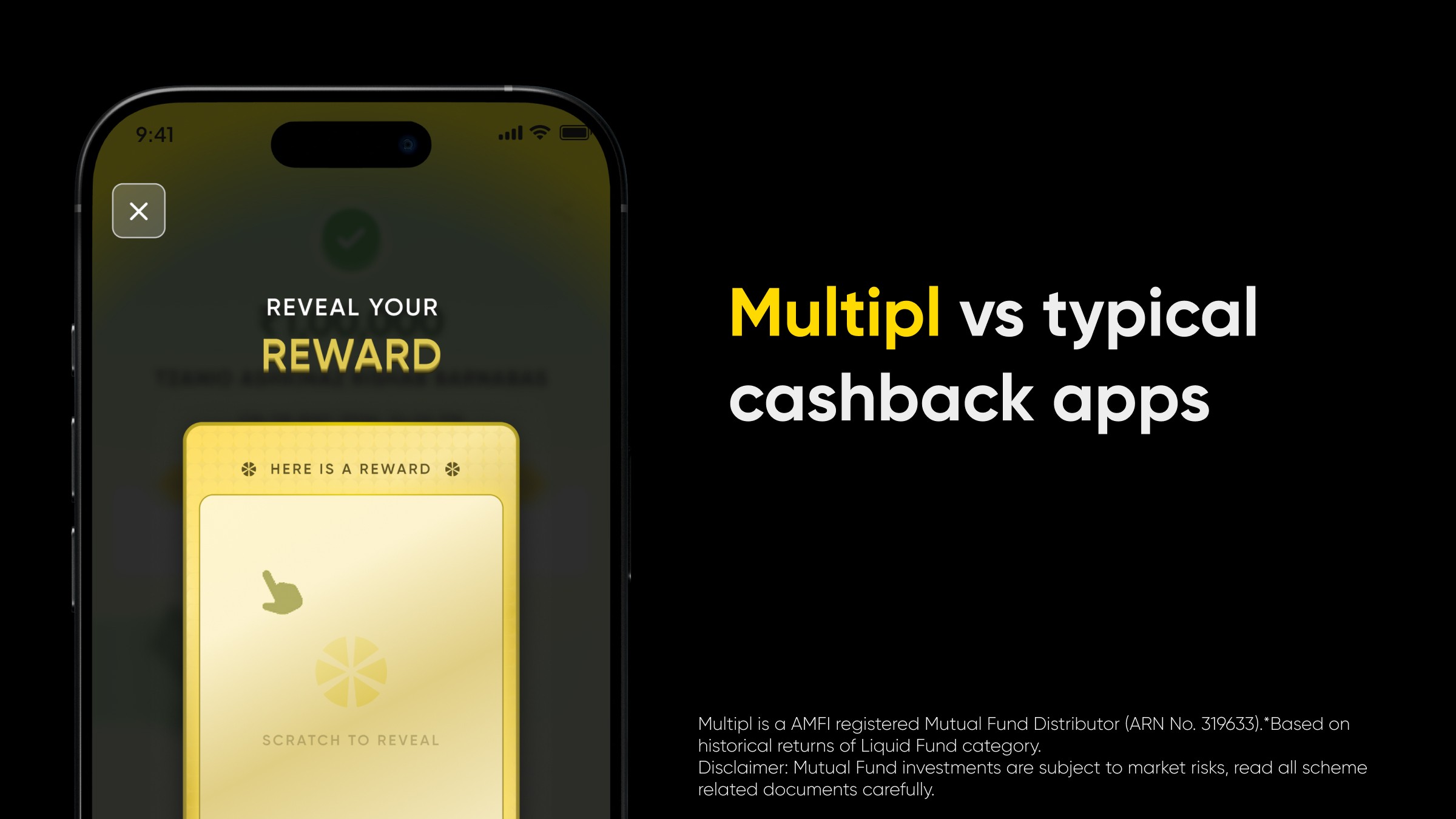
A typical cashback app says: spend first, reward later.
Multipl starts earlier in the cycle. You set aside money for future spending, and that money is invested in expert-selected liquid mutual funds so it can earn up to 7%* based on historical liquid-fund performance until you need it. For users planning regular spending, that changes the math.
Here is the practical difference.
Typical cashback app model
Value Arrives After Spending
Rewards May Be Small, Delayed, Or Conditional
Savings Depend On Eligible Transactions
Idle Money Before Purchase Usually Earns Little
Multipl’s spend-and-save model
Value Starts Before Spending
Money Set Aside For Near-Term Spends Can Potentially Grow
Users Can Access Brand Discounts Across Partner Brands
Funds Stay In The User’s Name As Mutual Fund Units At The AMC
Withdrawals Remain Available When Money Is Needed
This is why Multipl should not be judged as one more coupon app. It is closer to a high-yield spending account for people who want to stay liquid, avoid debt, and make routine or planned spending more efficient.
Multipl Wealth Management Private Limited operates as a SEBI-Registered Investment Adviser and AMFI-Registered mutual fund distributor. The app is designed for people who want their short-term money to stay accessible while working harder than idle cash in a traditional savings account. Mutual fund investments are subject to market risks, returns are not guaranteed, and users should read all scheme-related documents carefully before investing. SEBI registration INA200014681, AMFI ARN-319633, and NISM certification do not guarantee performance or assure returns.
Who should use cashback apps, and who should consider a spend-and-save approach instead
Cashback apps are useful. They are simply not the full answer for everyone.
Cashback apps are a good fit for you if:
You Shop Online Often And Compare Prices Before Buying
You Are Happy To Follow Offer Rules
You Redeem Rewards Consistently
You Want Small Savings On Regular Purchases
You Pay Credit Card Bills In Full If You Use Card Rewards
A spend-and-save approach may fit better if:
You Keep Meaningful Money Aside Each Month For Spending
You Want To Avoid EMIs And Debt For Near-Term Goals
You Prefer Earning On Idle Money Before You Spend
You Want Flexibility For Everyday And Planned Purchases
You Like The Idea Of Pairing Growth With Brand Discounts
This second group includes many Indian users who do not think of themselves as investors. They are simply savers with upcoming expenses. For them, a tool like Multipl can feel more practical than chasing scattered rewards across several apps.
If your real pain point is low earnings on parked money, then the best app for cashback might not be the best answer to the actual problem. A better answer may be an app that helps spending money grow while keeping it liquid.
Best cashback apps India roundup: the smartest way to combine rewards, discounts, and pre-spend growth
The smartest users usually do not pick one model and ignore the rest. They match the model to the transaction.
Use UPI rewards for convenience-led daily payments. Use affiliate cashback for planned online shopping where tracking is reliable. Use merchant discounts when partner-brand pricing beats delayed cashback. Use card-linked rewards only if you pay in full and understand the terms.
Then look one step earlier than most people do. If you are consistently setting aside money for everyday spending and short-term goals, ask whether that money should keep sitting idle. Multipl offers a different layer of savings by helping spend-ready money earn up to 7%* based on historical liquid-fund performance in expert-selected liquid mutual funds, with partner-brand discounts available on eligible spends.
That changes the question from “Which cashback app gives me the biggest reward today?” to “Which setup helps me keep more of my money over time?” For many users, that is the more useful comparison.
Mutual fund investments are subject to market risks. Read all scheme-related documents carefully before investing. No investment is zero-risk, liquid funds are low-risk rather than risk-free, gains from mutual funds are taxable, and SEBI registration and NISM certification do not guarantee performance or assure returns.
FAQs
Which is the best cashback app in India for everyday spending?
The best cashback app in India for everyday spending depends on where you spend most often. UPI rewards apps suit daily merchant payments and bills, while shopping cashback apps work better for planned online purchases. If you keep money aside before spending, a Spendvesting platform like Multipl can improve the outcome in a different way by helping idle money earn before checkout.
Are UPI cashback offers worth tracking regularly?
UPI cashback offers are worth tracking if you already use the app for routine payments and the rewards do not change your spending behaviour. They are usually best treated as a bonus, not as a core savings plan. Rewards can be promotional, inconsistent, and smaller than they first appear.
Do shopping cashback apps really save more than discount apps?
Shopping cashback apps can save more on selected online purchases, especially when the order value is high and the cashback tracks correctly. Discount apps can still be better when the offer is upfront, easier to use, and tied to brands you already planned to buy from. The better option depends on redemption rules, exclusions, and how quickly the value reaches you.
Is Multipl a cashback app?
Multipl is not a typical cashback app. It helps users set aside spending money in expert-selected liquid mutual funds through a Higher-Yield Spending Account, where it can earn up to 7%* based on historical liquid-fund performance until the day they spend it. Users can also access partner-brand discounts on eligible spends, but the main idea is pre-spend growth rather than post-spend rewards. The Higher-Yield Spending Account is not a bank savings account or a bank deposit, and it is not insured like a bank deposit.
Can cashback apps replace a proper savings strategy?
Cashback apps cannot replace a proper savings strategy because they usually reward transactions after money has already been spent. They can reduce the cost of planned purchases, but they do not usually help idle spending money grow in the meantime. If your goal is better control over short-term spending money, you may need both rewards and a stronger place to park that money.
Multipl is a AMFI registered Mutual Fund Distributor (ARN No. 319633).
*Based on historical returns of Liquid Fund category.
Disclaimer: Mutual Fund investments are subject to market risks, read all scheme related documents carefully.