•
1 min read
Best Money Saving Apps in India | Multipl

Money Saving Apps in India: Which Ones Help Before You Spend?
The best money saving apps do not all save money in the same way. Some help before a purchase by helping idle cash earn. Some cut your bill at checkout through offers or vouchers. Others return a small part of your spend later as cashback or points. If you use UPI for daily payments, that difference matters. Your money moves fast, and the app you choose decides whether you save before, during, or after each transaction.
This roundup looks at the full spending journey. Instead of putting every app into one generic list, it sorts money saving apps India users actually consider by how they create value. That gives you a clearer answer to a practical question: which app helps most before you spend, and which one helps only after the money has already gone?
The spending journey: where the best money saving apps actually save you money
Most people judge a savings app by the most visible benefit. A coupon shows up. A cashback notification arrives. A reward point balance grows. Those wins feel good, but they happen at different points in the spending cycle.
A better way to compare apps to save money is to ask three simple questions:
What happens Before the purchase?
Does the app help your money earn while it is waiting to be spent?What happens At the time of payment?
Does it reduce the bill through vouchers, discounts, or checkout offers?What happens After the payment?
Does it give you cashback, coins, or rewards later?
This matters because the value can vary a lot. An app that gives you a small cashback after a purchase can be useful, but it does nothing for the money sitting in your account for days or weeks before the payment. An app that helps your money grow before you spend changes the maths much earlier.
For everyday Indian users, the gap is even clearer in UPI-linked spending. Your Swiggy orders, Uber rides, flight bookings, shopping payments, subscriptions, school fee transfers, and impulse buys often come from money parked in a normal savings account. That cash usually earns around 2% to 3.5% in a bank savings account. A mutual-fund-powered spending account like Multipl aims to make that spend-ready money earn up to 7%* based on historical liquid-fund returns while it waits, with access to your money when you need it and partner brand discounts on eligible redemptions. Returns are market-linked, not guaranteed, and liquid funds are low-risk, not risk-free. No investment is zero-risk.
Seen this way, cashback apps vs saving apps is not a small category difference. It answers a different question: when do you want the app to work for you?
Stage 1 — Before you spend: apps that help your money grow while it waits
This is the most missed layer in personal finance. People often focus on saving at checkout, but ignore the money parked before the purchase. If you keep monthly spending money in a low-yield account, the money is accessible, but mostly idle.
Apps in this category try to improve that.
Spendvesting and high-yield spending accounts
This is where Multipl stands apart from many traditional savings apps. It is built around a simple idea: money meant for upcoming spends should not sit idle if it can stay liquid and earn more. Instead of acting like a cashback app, Multipl lets users set aside money for future spending and invest it in expert-selected liquid mutual funds through its Higher-Yield Spending Account.
Here is the practical value:
Your spending money can earn while it waits
Your money remains liquid and withdrawable
You can plan for both expected and unplanned spends
Eligible goals can unlock brand discounts at redemption
For users comparing the best apps to save money in India, this is a different kind of benefit. The value shows up before a transaction happens. If you already know you will spend on travel, gadgets, groceries, festivals, or routine app payments, parking that money in a low-risk liquid-fund-based account can be more efficient than leaving it idle in a regular savings account.
Multipl says this balance can earn up to 7%* based on historical liquid-fund returns, versus roughly 2% to 3.5% in a savings account. That is not a fixed return, and it is not a bank deposit or insured like a bank deposit. Mutual fund investments are subject to market risks, and returns vary with market conditions. Still, for short-term money, this category is worth a look because it aims to improve the outcome on cash that would otherwise do very little.
Goal-based savings apps
Some users are not looking for an everyday spending balance. They want help saving for a specific purchase: an iPhone upgrade, a family holiday, wedding expenses, annual school fees, or festive shopping. Goal-based money apps fit this need well because they give your saving a purpose and a deadline.
The best versions of these apps do three things well:
They Turn a vague intention into a scheduled plan
They Help you separate spend money from main-account money
They Reduce the chance of using credit or EMIs for planned buys
Multipl’s Planned Spends layer fits here for goals in the short-to-medium term, roughly 3 to 12 months, using curated mutual fund allocations based on the goal and time horizon. Historical category returns may be higher than a basic savings account, but they are market-linked and not assured.
Round-up and micro-saving apps
Some apps save by skimming tiny amounts from purchases or by moving spare change into a savings bucket. These can help users who struggle to build the saving habit, but they solve a different problem. They improve discipline more than yield.
That makes them better for:
First-time savers
Users who need automation to build consistency
People who want painless habit formation
They are less useful for someone who already keeps meaningful sums aside each month and wants that money to work harder before being spent.
Stage 2 — As you spend: apps that cut the bill through offers, vouchers, and checkout savings
This is the most crowded part of the market. Deal apps, coupon apps, brand voucher platforms, and payment apps all compete here. They lower the bill at the moment of purchase.
That can help, especially when the discount is real and relevant. But timing matters. These apps help only when you are already spending.
Voucher and gift card apps
Voucher-focused apps offer discounted gift cards or store credit for popular merchants. If you are already sure about the merchant, the savings can be immediate and easy to understand.
They work best for:
Repeat purchases from known brands
Travel booking and shopping categories
Users who plan purchases before checkout
The downside is flexibility. If your plans change, your money may be stuck in a merchant-specific format instead of staying broadly liquid.
Multipl adds a version of this idea through partner brand discounts tied to goal redemption. That keeps the saving linked to a broader savings journey instead of making vouchers the only value layer.
Payment apps with checkout offers
Many UPI and wallet apps run periodic offers, scratch cards, merchant cashbacks, and checkout promotions. These can create savings, but they often vary by campaign, payment partner, transaction size, or merchant category.
They are good for:
Transaction-time convenience
Short promotional bursts
Users who already compare offers before paying
They are less dependable as a long-term saving system because the value is inconsistent. One month may bring several offers. The next may bring almost none.
Coupon and deal discovery apps
These apps help price-conscious users look for promo codes, affiliate deals, and temporary campaigns. They can reduce spend when used carefully, especially for larger purchases.
Still, there are trade-offs:
The discount may not apply to your order
The best deal may push you toward unnecessary spending
Time spent chasing coupons can reduce the real gain
That last point is easy to miss. Saving money at checkout is useful, but it is still tied to a purchase decision. If an app makes you buy more often because “the deal is too good,” it has not really improved your finances.
Stage 3 — After you spend: apps that return value through cashback and rewards
Cashback apps are popular because the reward is visible. You spend, then part of the money comes back. Sometimes it is direct cashback. Sometimes it is a point system, wallet credit, or a reward that can be redeemed later.
This model can work well, but it helps to see it clearly. Cashback does not reduce the need to fund the purchase in the first place. It rewards spending that already happened.
Cashback apps
These are among the most common money saving apps India users discuss. They often partner with merchants, wallets, or card issuers to give a portion of the transaction value back.
Their strengths are simple:
They Are easy to understand
They Reward transactions you were already making
They Can stack with sale prices in some cases
Their limits matter too:
Cashback is often delayed
Rewards may come with conditions
The percentage saved may be small
The spending trigger still happens first
This is the heart of the cashback apps vs saving apps debate. Cashback helps after the fact. A saving app that lets your money earn before you spend changes the starting point.
Reward and loyalty apps
Many platforms return value through brand points, coins, miles, or loyalty wallets. These can work well for heavy users of one ecosystem, especially in travel and retail.
For broad household finance, though, they are narrower than they first look. The value is often locked inside the brand, the redemption rules may change, and the actual rupee benefit is not always clear.
Best money saving apps in India for everyday UPI-linked spending
UPI changed the way India spends. Payments are instant, frequent, and often low-friction. That convenience is great for daily life, but it can make money leave your account faster than you notice. So the right app for UPI-linked spending should do more than process payments well. It should help you get better outcomes around those payments.
Here is how the main app types compare for everyday UPI-linked spending:
1. Spendvesting apps
These are strongest for users who keep money aside before spending and want it to stay productive. Multipl is the clearest example in this category because it is built around the idea of making your spend-ready balance earn through liquid mutual funds until you need it.
Best for:
Monthly spend planners
Users trying to avoid EMIs or credit rollovers
People who make frequent UPI payments from parked cash
Savers who want more from short-term money than a regular savings account typically gives
2. Payment apps with merchant offers
These are useful for cutting the bill at checkout when offers are active. If you regularly check deals before paying, they can add tactical value.
Best for:
Frequent UPI users
Offer hunters
People comfortable switching apps based on promotions
3. Cashback and rewards apps
These fit users who already have stable spending patterns and want a little value returned afterward.
Best for:
High transaction volume users
Brand-loyal customers
People who track reward balances actively
4. Budgeting and expense tracker apps
These apps do not usually save you money directly on a transaction. Their value comes from awareness, category tracking, and spending control.
Best for:
People trying to reduce leakage
Households building monthly discipline
Users who overspend because they do not track cash flow
For everyday UPI use, the strongest stack is often a combination. A spending-growth layer before the purchase, a discount layer at checkout, and a reward layer after the spend each solve a different part of the problem.
Why Multipl changes the math before a purchase happens
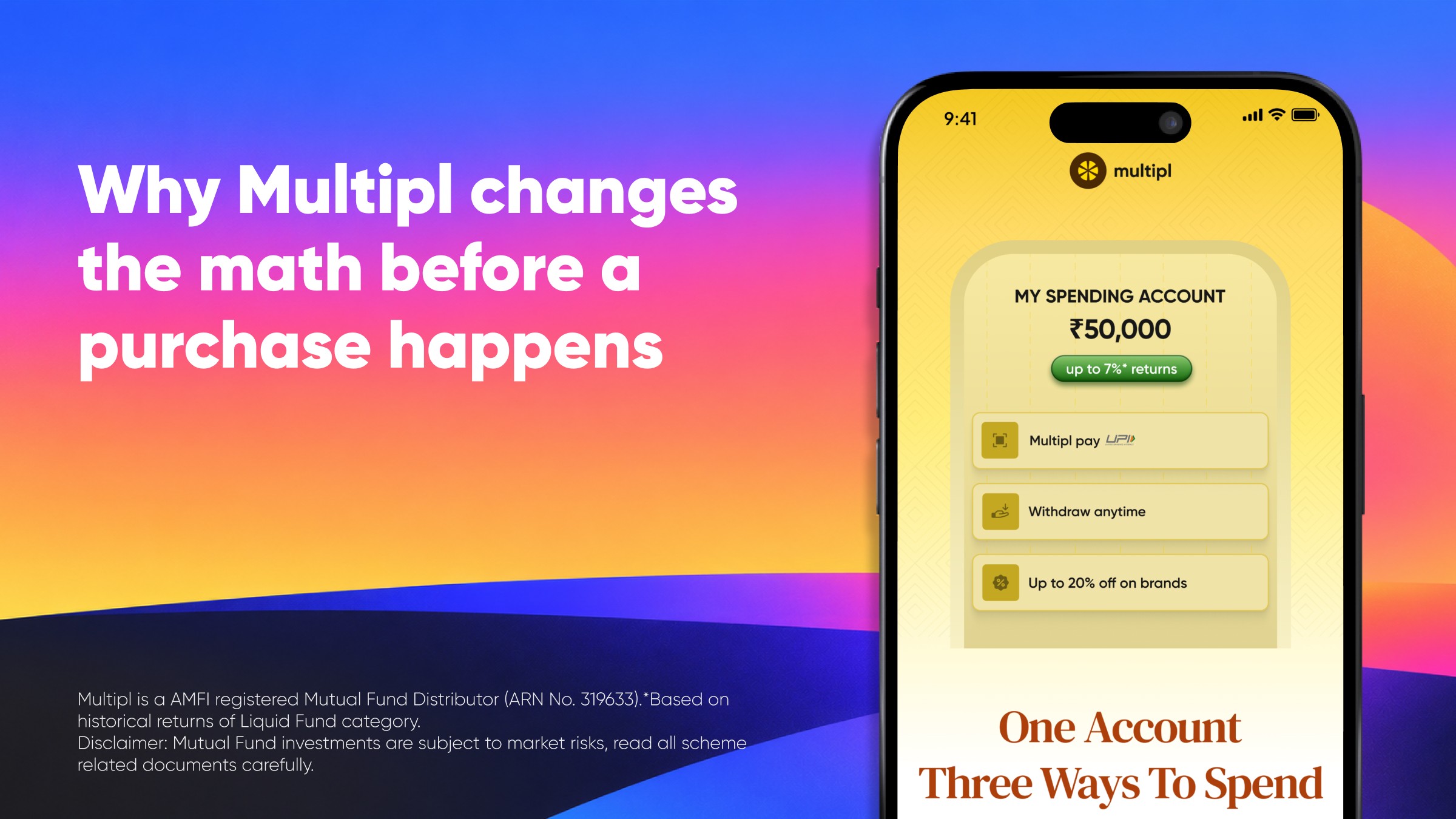
Most saving apps show up once you are about to pay or after you have paid. Multipl enters earlier, while the money is still waiting.
That timing changes the economics of everyday spending.
If you already know that part of your monthly income will go toward food delivery, shopping, electronics, flight bookings, healthcare, subscriptions, gift buying, or seasonal expenses, that money does not need to sit passively in a low-yield account until the due date. Multipl’s idea is to place that spend-ready balance into expert-selected liquid mutual funds so it can aim to earn up to 7%* based on historical liquid-fund returns while remaining liquid. On eligible redemptions, users may also get partner brand discounts, adding another layer of value.
That creates three practical differences:
Better use of idle money
Idle spending money often earns very little in a traditional savings account. Multipl is built to improve that by treating near-term spending money as something that can still work for you before it gets spent.
A debt-free way to plan purchases
A lot of consumer finance is built around paying later. Multipl shifts the behaviour toward saving first and spending from money you have already set aside. That can help users avoid EMIs for many planned purchases.
One bridge between saving and spending
Many people keep saving and spending in separate mental buckets. Multipl connects them. The savings vehicle is tied directly to future purchases, including UPI-linked daily spends, planned goals, and brand-specific redemptions.
This is why Multipl belongs in a serious conversation about the best money saving apps. It fills a gap that most cashback and checkout tools do not address.
Best money saving apps compared by savings potential, access to money, and ideal use case
A buyer-style comparison gets clearer when you compare app types, not just app logos.
App Type | How It Saves Money | Savings Potential | Access To Money | Ideal Use Case |
|---|---|---|---|---|
Spendvesting App | Helps idle money earn before spending, may add partner discounts | Moderate to high, depending on balance size and time parked | High liquidity, subject to redemption process | Monthly spending money, planned purchases, UPI-linked spending |
Goal-Based Savings App | Builds discipline and may grow money toward a target | Moderate | Usually good, depends on product setup | Travel, gadgets, school fees, festive spending |
Voucher App | Cuts bill with discounted gift cards or merchant credit | Transaction-specific | Limited to merchant or voucher terms | Repeat spending at known brands |
Payment App With Offers | Gives checkout deals, coupons, or campaign benefits | Low to moderate, often inconsistent | Immediate at time of payment | Daily payments when promotions are active |
Cashback App | Returns part of spend after purchase | Low to moderate | Delayed or conditional | Frequent transactions, reward-focused users |
Budgeting App | Reduces overspending through visibility and tracking | Indirect but meaningful over time | Full access, since money stays in linked accounts | Habit correction and monthly control |
For buyers comparing best apps to save money in India, the first decision should be about mechanism. Do you want your money to grow before you spend, or do you want small savings attached to the payment itself?
Mistakes to avoid when choosing a money saving app
A lot of users download a savings app because the headline benefit looks attractive. The better choice comes from matching the app to the stage where you need help.
Avoid these common mistakes:
Choosing A cashback app when your bigger problem is idle money
If large sums sit unused before spending, improving the yield on that money may matter more than earning a small percentage back later.Mistaking Liquidity for risk-free returns
Easy access does not mean zero risk. Liquid funds are low-risk, but no investment is completely risk-free, and returns are not guaranteed.Ignoring Where value actually appears
A discount at checkout feels immediate, but it may matter less than what your monthly balance could have earned over time.Overvaluing Coupons that trigger unnecessary spending
A deal is useful only if it supports a purchase you already planned to make.Using Too many disconnected apps
If one app tracks spending, another offers cashback, and a third manages planned purchases, your system can get messy fast. A clearer structure usually leads to better decisions.Forgetting Tax and product structure
Mutual fund gains are taxable, and a mutual-fund-powered spending account is different from a bank deposit. Read the product terms and scheme documents carefully. This is general information, not individualized tax or investment advice.
Our verdict: which type of money saving app is best for each user
There is no single winner for every person. The best fit depends on when you want the app to help.
If you want help before you spend, a Spendvesting-style app is the most useful option. It addresses the silent drag of idle money and suits users who keep meaningful balances aside for upcoming expenses. That is where Multipl has a clear edge.
If you want help at the moment of payment, voucher apps and payment apps with offers work well. They are best for users who already compare merchants and do not mind checking deals before checkout.
If you want help after spending, cashback and rewards apps can add a small extra return. They are useful as a bonus layer, not as the main savings strategy for most households.
If your biggest issue is overspending, a budgeting app may save you more than any coupon. It changes behaviour rather than transaction maths.
For many Indian users, the strongest setup is simple:
Use A before-you-spend app for parked spending money
Use Checkout savings only for purchases you already planned
Treat Cashback as a bonus, not the core strategy
That is also the cleanest way to read the crowded market for the best money saving apps. The real question is not which app looks most generous in an ad. It is which one improves the outcome of your money at the right moment in the spending journey.
Mutual fund investments are subject to market risks, and users should read all scheme-related documents carefully. SEBI registration and NISM certification do not guarantee performance or assure returns.
FAQs
Are cashback apps better than saving apps?
Cashback apps are better for post-purchase rewards, while saving apps are better for improving the value of money before a purchase happens. If your main goal is to make idle spending money work harder, a saving-first model is usually more useful than waiting for cashback after spending.
Which are the best apps to save money in India for short-term goals?
The best apps to save money in India for short-term goals are usually goal-based savings apps and Spendvesting apps. They are useful for expenses like travel, gadgets, school fees, and festive shopping because they help you set money aside with easier access than many long-term products.
Can I use a money saving app for everyday UPI spending?
Yes, you can use a money saving app for everyday UPI spending if the product is designed for liquid, spend-ready balances. Multipl is positioned around this idea by letting users keep short-term spending money in liquid mutual funds so it can aim to earn until it is needed, though returns are market-linked and not guaranteed.
Is Multipl a bank savings account?
No, Multipl is not a bank savings account. It is a mutual-fund-powered spending and savings solution where money is invested in selected mutual funds, so it is different from a bank deposit, is not insured like a bank deposit, and does not offer fixed or assured returns.
Are liquid mutual funds risk-free for saving before you spend?
No, liquid mutual funds are not risk-free. They are generally considered low-risk and suitable for short-term parking of money, but mutual fund investments are subject to market risks and returns can vary with market conditions.
Multipl is a AMFI registered Mutual Fund Distributor (ARN No. 319633).
*Based on historical returns of Liquid Fund category.
Disclaimer: Mutual Fund investments are subject to market risks, read all scheme related documents carefully.