•
1 min read
The Future of Personal Finance: Why Continuous Cash Optimization Is Becoming the New Standard

Introduction: From static money to dynamic money
Historically, money was static.
It sat in savings accounts until used or invested.
Today, financial infrastructure allows money to remain productive continuously.
This represents a shift toward continuous cash optimization.
The traditional model
The traditional model involved:
Savings account → spending → investment
Savings accounts served as passive storage.
The modern model
The modern model integrates liquidity and efficiency.
Liquid mutual funds and Higher-Yield Spending Accounts allow money to remain productive even while waiting.
This improves overall financial efficiency.
Why this shift is happening
Several factors are driving this change:
Improved financial infrastructure
Greater financial awareness
Digital platforms simplifying access
These developments enable better cash management.
The role of Higher-Yield Spending Accounts in this transition
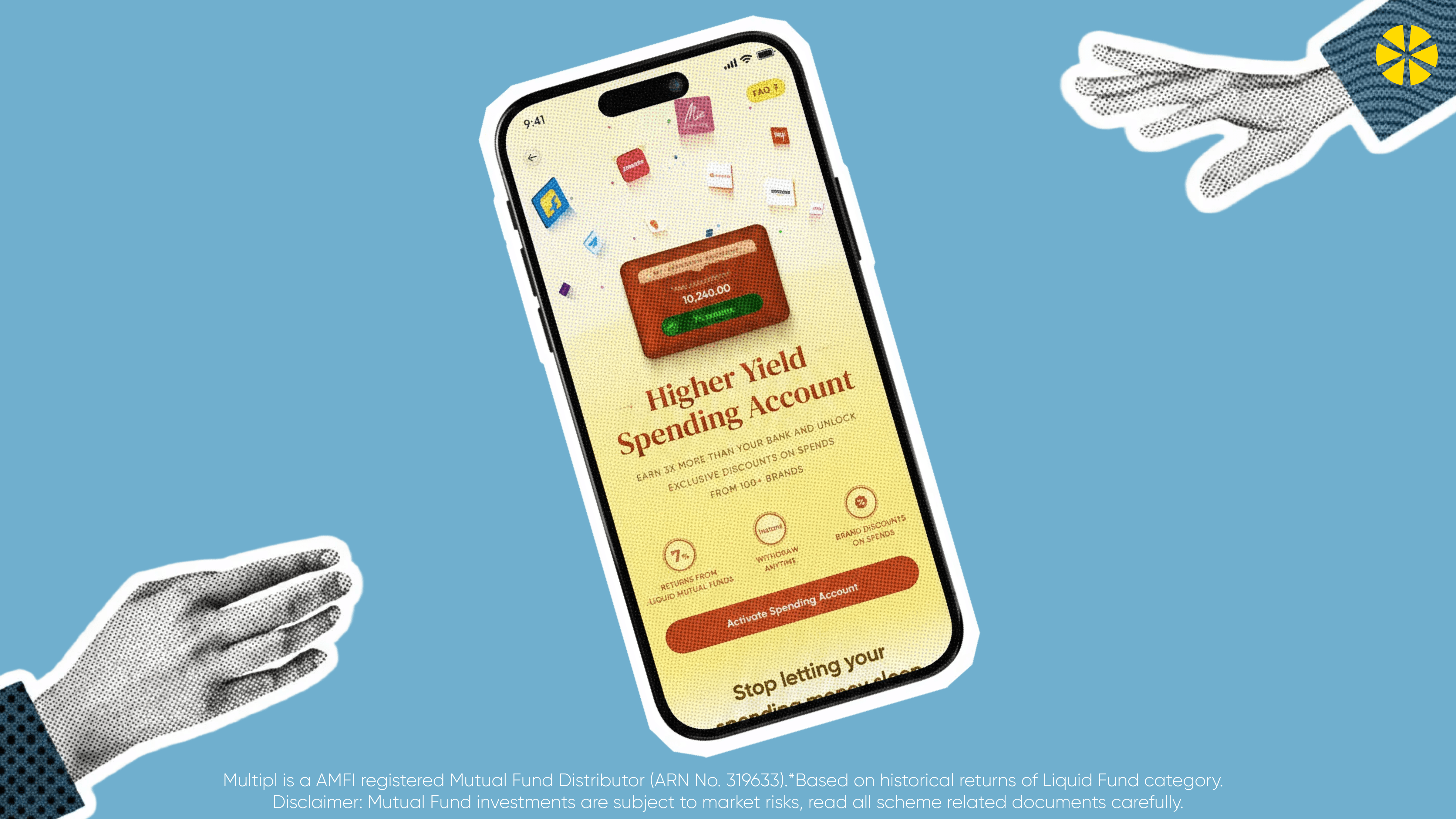
Higher-Yield Spending Accounts represent infrastructure designed specifically for modern financial behaviour.
They allow spending money to remain productive without sacrificing accessibility.
Conclusion
Personal finance is evolving.
The focus is shifting from static storage toward continuous optimization.
Savings accounts remain important for transactions.
Liquid mutual funds and Higher-Yield Spending Accounts provide additional efficiency.
Understanding these tools helps individuals manage money more effectively.
Multipl is a AMFI registered Mutual Fund Distributor (ARN No. 319633). *Based on historical returns of Liquid Fund category.
Disclaimer: Mutual Fund investments are subject to market risks, read all scheme related documents carefully.