•
1 min read
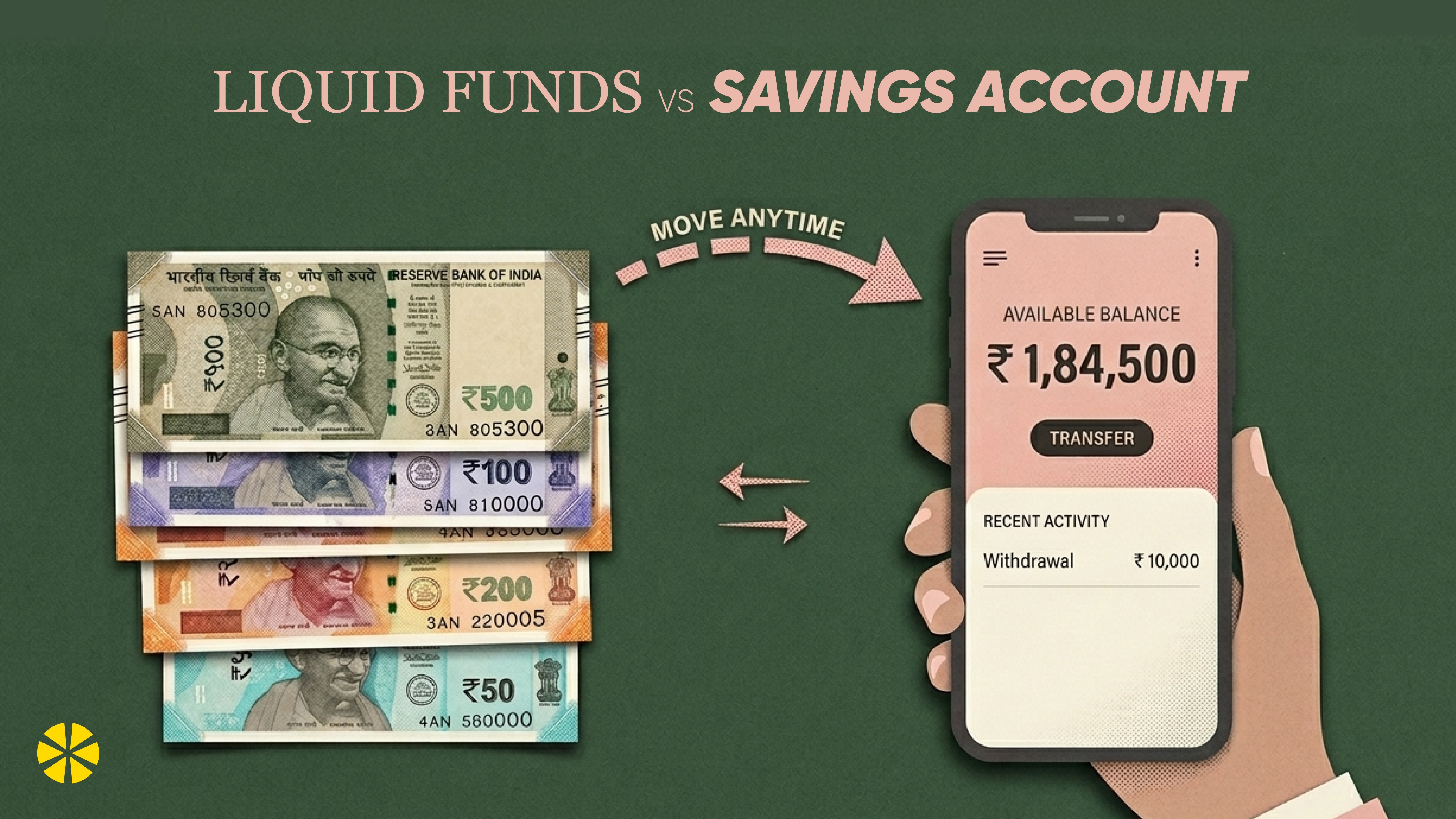
Liquid Funds vs Savings Account: Can You Use Both Like Cash?
TL;DR
Liquid funds are great for parking idle money efficiently, but they are not a full replacement for a savings account.
Savings account = instant access, transactions
Liquid funds = better returns, slight delay
Best setup = use both, for different purposes
The Real Question People Are Asking
When people search “liquid funds vs savings account”, they’re not just comparing returns.
They’re asking:
“Can I treat liquid funds like my bank account?”
Short answer:
Not exactly. But close enough for the right use case.
Let’s break this down properly.
First: What a Savings Account Actually Does
A savings account is not designed to grow your money.
It’s designed for:
Deposits and withdrawals
UPI payments
Bill payments
Instant access
Returns (~2.5–4%) are almost an afterthought.
Think of it as a transaction layer, not a growth tool.
What Liquid Funds Actually Do
Liquid mutual funds are built for short-term money management.
They invest in:
Treasury bills
Government securities
Commercial paper
Certificates of deposit
All with maturities under 91 days.
Their goal is simple:
Keep money stable, liquid, and slightly more productive
The Core Difference (This is what matters)

Feature | Savings Account | Liquid Funds |
Access | Instant | T+1 (usually next working day) |
Usage | UPI, bills, ATM | Redemption first, then use |
Returns | ~2.5–4% | ~6–7% historically* |
Risk | Very low | Low (market-linked) |
Tax | Slab rate | Slab rate (debt funds) |
*Based on historical performance, not guaranteed.
Myth vs Fact (The confusion most people have)
❌ Myth 1: Liquid funds = savings account replacement
Fact:
They are a better parking tool, not a transaction account.
❌ Myth 2: You can spend directly from liquid funds
Fact:
You need to redeem first, unless a platform integrates spending.
❌ Myth 3: Liquid funds are risky like equity
Fact:
They invest in short-term, high-quality debt, not stocks.
❌ Myth 4: Money is locked
Fact:
Most liquid funds allow withdrawal within 1 working day.
The Real-Life Usage Breakdown
This is where most articles fail. Let’s make it practical.
Use Savings Account For:
UPI payments
Daily expenses
Immediate emergencies
Salary inflow
This layer is non-negotiable
Use Liquid Funds For:
Money waiting to be spent
Travel funds
Insurance premiums
Short-term savings
Emergency buffer (layer 2)
This is your efficiency layer
Example (How people actually use both)
Let’s say you have ₹1,00,000:
₹20,000 → Savings account (daily use)
₹80,000 → Liquid fund (waiting money)
Result:
You keep liquidity
Most of your money earns better returns
Can Liquid Funds Handle Emergencies?
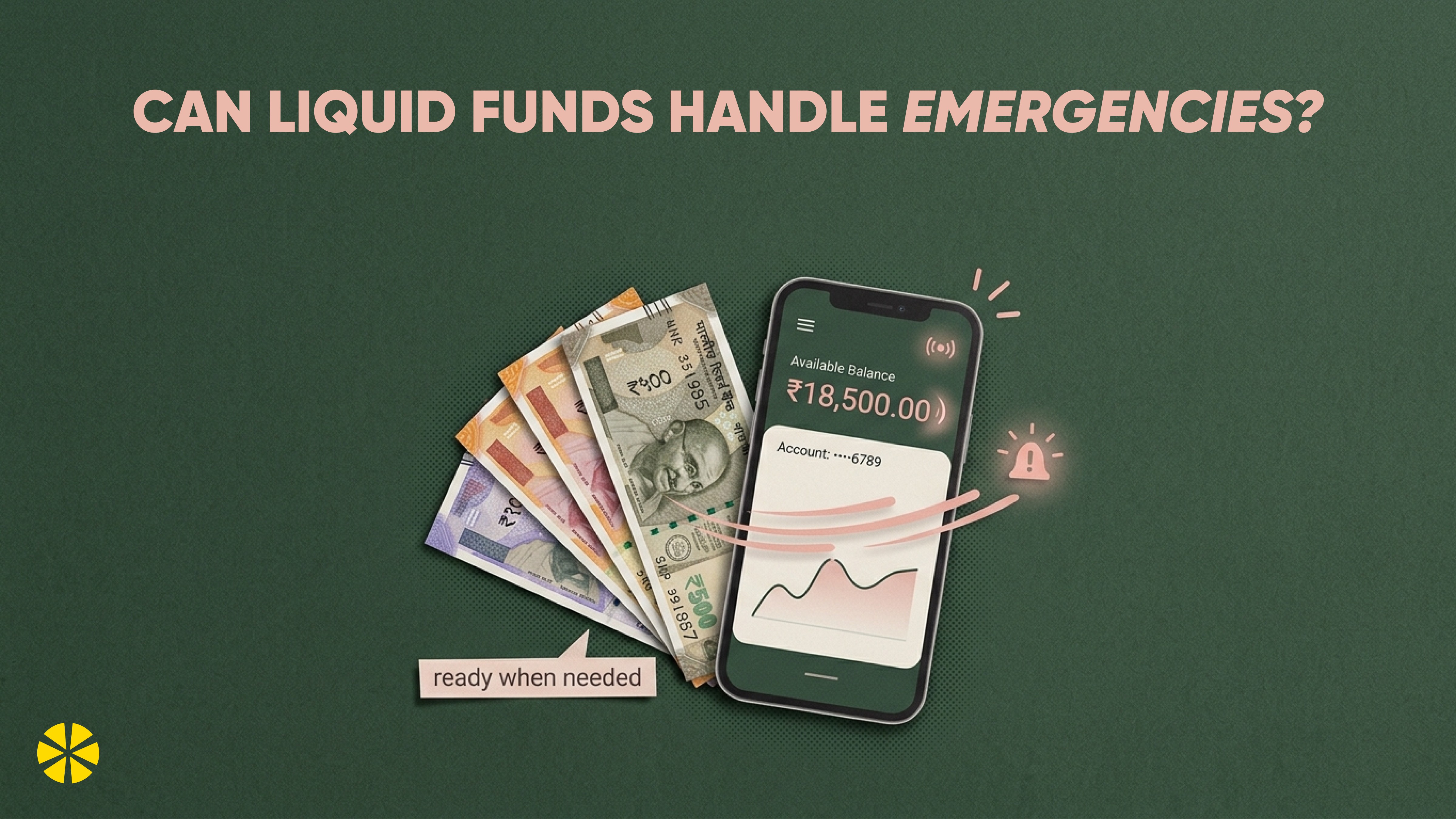
Yes — but with a caveat.
What they CAN do:
Provide access within 1 working day
Handle planned or near-term emergencies
What they CANNOT do:
Replace instant cash access
Work for same-minute needs
Best approach:
Layer your emergency fund:
Layer 1: Savings account (instant)
Layer 2: Liquid funds (efficient backup)
What About Instant Redemption?
Some platforms offer instant redemption (within limits).
But:
There are caps (e.g., ₹50,000/day)
Not all funds support it
So don’t rely on it fully
Think of it as a bonus, not a guarantee
The Big Insight Most People Miss
The goal is NOT:
“Replace your savings account”
The goal is:
“Stop letting large amounts of money sit idle in it”
Because in real life:
Money sits for days, weeks, months
That idle time is where efficiency matters
Where Higher-Yield Spending Account Fits In

This is where things evolve.
A Higher-Yield Spending Account:
Uses liquid funds in the backend
Keeps money accessible
Allows spending-like usage
It tries to bridge the gap between:
Bank convenience
Liquid fund efficiency
When NOT to Use Liquid Funds
Be clear about this.
Avoid liquid funds if:
You need money instantly every time
You don’t want any NAV fluctuation
You are uncomfortable with market-linked products
Simple Decision Framework
Use this:
Need money NOW → Savings account
Need money SOON → Liquid funds
Want both → Combine them
Final Thought
Liquid funds are not here to replace your bank.
They’re here to fix what your bank doesn’t do well:
Make your idle money work
If your money is sitting in a savings account for weeks…
…it’s not “safe.” It’s just underutilized.
Multipl is a AMFI registered Mutual Fund Distributor (ARN No. 319633). *Based on historical returns of Liquid Fund category.
Disclaimer: Mutual Fund investments are subject to market risks, read all scheme related documents carefully.