•
1 min read
How to Choose a Liquid Fund: 5 Things to Check

Most articles will give you a list of the “best liquid funds right now.”
Very few will tell you how to actually decide if a fund is right for you.
And that’s the real problem.
Because if you get the selection wrong, you could end up with:
A fund that charges you when you withdraw early
A portfolio holding lower-quality instruments than expected
A fund that doesn’t give you access when you need it
Liquid funds are simple in concept.
But choosing the right one requires a few specific checks.
This guide breaks down 5 things that actually matter and how to verify each one in under 30 seconds.
Why Choosing the Right Liquid Fund Matters
Liquid funds are typically used for:
Short-term savings
Money waiting to be spent
Emergency funds
Which means one thing matters above everything else:
👉 Reliability
Not just returns.
You’re not trying to maximize returns.
You’re trying to ensure your money is:
Safe
Accessible
Efficient
That’s what these 5 criteria help you evaluate.
1. Expense Ratio- The Silent Return Killer
What it is
The expense ratio is the annual fee charged by the fund.
It directly reduces your returns.
What to look for
👉 Lower is always better
Typical range for liquid funds:
Direct plans: ~0.10% to 0.30%*
Regular plans: Higher (due to commissions)
Why it matters
Liquid funds already operate in a low-return range (up to 7%*)
So even a small difference in expense ratio can eat into returns meaningfully.
How to check (30 seconds)
Go to the fund factsheet or app
Look for: “Expense Ratio”
Ensure you are choosing the Direct Plan
2. Credit Quality- What Your Money Is Actually Invested In
What it is
Liquid funds invest in debt instruments issued by:
Banks
Corporates
Government
Each instrument has a credit rating.
What to look for
👉 Majority allocation in AAA-rated instruments
This indicates:
High creditworthiness
Lower default risk
Why it matters
Higher returns sometimes come from lower-rated instruments.
That means higher risk.
For short-term money, this trade-off usually isn’t worth it.
How to check (30 seconds)
Open portfolio allocation in factsheet
Look for “Credit Rating Distribution”
Ensure majority is in AAA / Sovereign
3. AUM (Assets Under Management)- Size Matters (To a Point)
What it is
AUM = Total money managed by the fund.
What to look for
👉 Prefer funds with moderate to large AUM
Typically:
₹5,000 crore and above is considered stable
Why it matters
Very small funds → liquidity risk
Very large funds → sometimes slower flexibility
But in liquid funds, larger AUM generally signals stability and trust
How to check (30 seconds)
Look at fund overview
Check “AUM” value
4. Exit Load- The Hidden Catch
What it is
Exit load = Fee charged when you withdraw money early.
What to look for
👉 Most liquid funds have graded exit load for 0–7 days
Example:
Day 1–2 → small fee
Day 7+ → no exit load
Why it matters
If you withdraw too early, your returns can drop.
For money that might move quickly, this matters.
How to check (30 seconds)
Open “Exit Load” section in factsheet
Check holding period conditions
5. Redemption Speed- When You Actually Need the Money
What it is
How quickly you can access your money.
What to look for
👉 Two types:
Standard redemption → T+1 (next working day)
Instant redemption → within minutes (with limits)
Why it matters
Liquid funds are used for short-term needs.
So access speed is critical.
How to check (30 seconds)
Check platform/app features
Look for “Instant Redemption” availability
Verify limits (usually ₹50,000 or 90% of investment)
Quick Checklist: What a Good Liquid Fund Looks Like
Before selecting, run through this:
✔ Low expense ratio (direct plan)
✔ Majority AAA-rated portfolio
✔ Healthy AUM size
✔ Minimal/clear exit load structure
✔ Fast or instant redemption access
If a fund passes all five → it’s doing its job.
Common Mistakes to Avoid
1. Choosing based on returns alone
Liquid funds are not meant for return chasing.
2. Ignoring credit quality
Higher yield often = higher risk.
3. Not checking exit load
You might pay for accessing your own money.
4. Assuming all liquid funds are the same
They’re similar, but not identical.
So Which Liquid Funds Pass All 5 Criteria in 2026?
Instead of chasing “top fund lists,” look for funds that consistently meet:
Low expense ratio
High credit quality
Strong AUM
Clean exit load structure
Reliable redemption
Examples often include funds from large AMCs with conservative portfolios.
(Exact fund selection should still depend on your platform and access preferences.)
The Real Problem: Doing This Every Time
Here’s the truth:
Most people don’t want to:
Read factsheets
Compare credit quality
Track exit loads
Check redemption conditions
They just want a simple place where:
👉 Their money is safe
👉 Their money is accessible
👉 Their money stays efficient
The Shift Toward Pre-Screened Cash Management
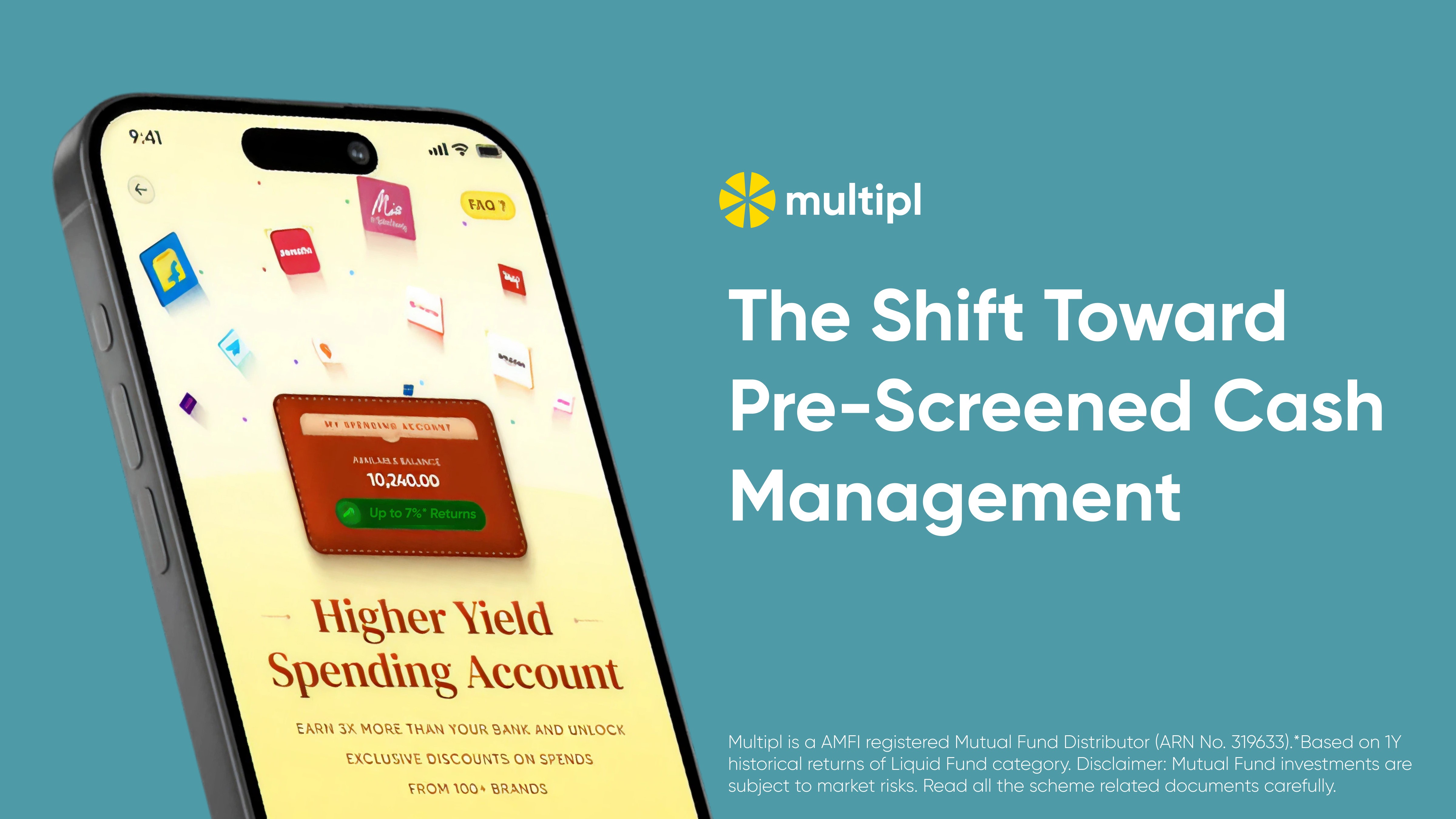
This is where newer systems are evolving.
Instead of making users evaluate funds manually,
some platforms apply these filters by default:
High-quality liquid funds
Optimized for liquidity
Built for short-term money
This turns liquid funds from:
👉 An “investment decision”
into
👉 A default money management layer
Final Thoughts
Choosing a liquid fund isn’t complicated.
But it does require attention to the right details.
You don’t need to track markets.
You don’t need to chase returns.
You just need to ensure:
👉 The fund does what it’s supposed to do
Which is:
Keep your short-term money safe, accessible, and efficient.
Because at the end of the day, liquid funds aren’t about investing better.
They’re about not letting your money sit idle.
Multipl is a AMFI registered Mutual Fund Distributor (ARN No. 319633). *Based on historical returns of Liquid Fund category.
Disclaimer: Mutual Fund investments are subject to market risks, read all scheme related documents carefully.